Karaikudi is reckoned the best place to live among the towns of
Sivagangai district. Ask why and people name the same things: the schools, the water, the hospitals and
the trade — and they usually put the water before the hospitals.
Three parts · general information, not medical advice
· about twelve minutes
Health in a town begins before any hospital does — in its water, its houses, its
food and its habits. Karaikudi has been fortunate in all four, and has added to them steadily since it
became a municipality in 1928. This page describes that in general terms. It is not medical advice, and it
is not a directory.
Part OneWaterIn a semi-arid taluk that gets 87 centimetres of rain in a short window, water
is a health question before it is anything else.
Water, and the ground beneath
Karaikudi sits at between about 82 and 118 metres above sea level on the dry plain of Sivagangai district. It receives
roughly 87 centimetres of rain a year, around sixty per cent of it from the northeast monsoon rather
than the southwest — which means the rain arrives late in the year, in a short window, and there is
not a great deal of it. Summers average near 37 °C.
Against that, the town has an unusually good water table. Three things account for it: the
Thean aaru, the river that runs west to southeast across the south end of the town; the old network of
tanks and kanmai spread across the taluk, which catch what falls and let it soak; and the
Sambai ootthu, the artesian spring near the Thean aaru beside the Karaikudi–Devakottai road,
which supplies the municipality's drinking water.
Good ground water is named in the same breath as the schools and the trade when people call Karaikudi the
best place to live in the district. That is not sentiment. In this part of Tamil Nadu it is the single
variable that most reliably separates a town people move to from one they leave.
In this part of Tamil Nadu, ground water is the single variable that most reliably separates a town
people move to from one they leave.
On why the water comes first
The tanks and the Sambai spring
The kanmai system is old technology and very good technology. A tank is an earthen bund thrown across
a shallow valley to hold the runoff of one monsoon; a cascade of them, each overflowing into the next down a
gentle gradient, catches water that would otherwise leave the district in a week and holds it in the ground
for months. Sivagangai has hundreds of them.
Where the town's water comes from. The point of a kanmai cascade is not storage so much
as recharge — each tank holds the runoff long enough for it to soak, and it is the water table
underneath, not the tanks themselves, that carries the district through the dry months to the
Sambai spring. Schematic, not a survey; the gradient and the number of tanks are
illustrative.
The Chettinad mansions were built with rainwater harvesting designed in, and the design is better than it
first sounds. Because the roofs of these houses pitch inward to their courtyards rather than outward
to the street, the whole building is a catchment. Rain is filtered through fine cloth and funnelled into
large brass vessels, where it keeps for weeks — free of the mineral hardness that ground water carries
in this district.
The tradition holds that storage in brass is what keeps the water sweet for so long. The modern reading is
that copper and its alloys are mildly antimicrobial, which is a reasonable account of an old practice that
plainly worked. Either way it is an answer, built into the fabric of the houses, to a problem the modern
town still spends money on.
Part TwoThe hospitalsA government hospital opened in 1940 by a future Governor-General, the referral
hospital that replaced it, and the private sector that grew up around both.
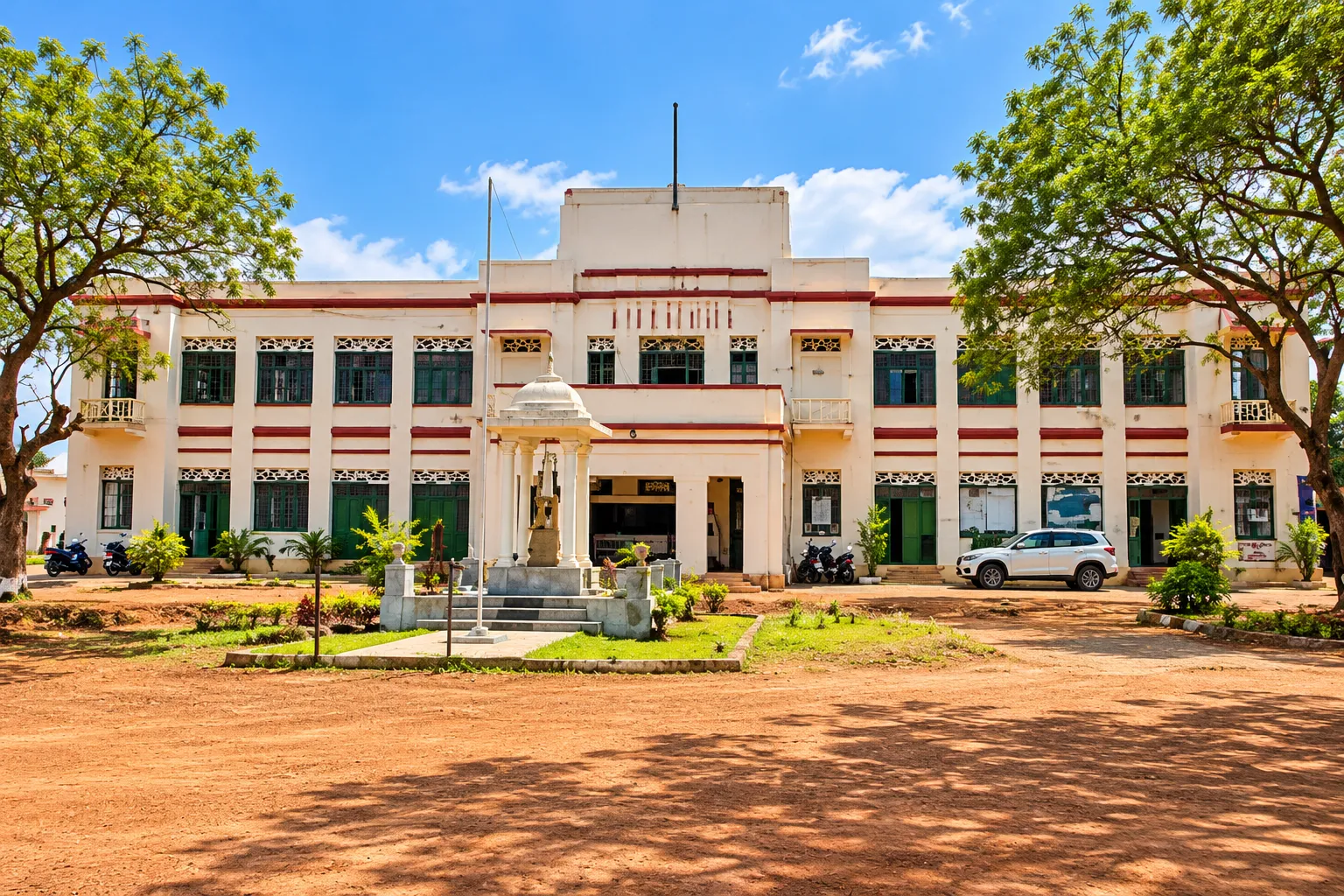
A Government hospital was established at Karaikudi in 1940 — the building known ever since as
Gandhi Maligai. Sri Chakravarti Rajagopalachari inaugurated it on 26 May of that year,
eight years before he became the last Governor-General of India.
It came in the same run of works that gave the town its municipality in 1928, its railway in
1930, and its roads, drinking water, electricity and communications. Those four decades are what turned
a cluster of settlements into a town, and a hospital was treated as one of the necessary pieces rather
than an afterthought.
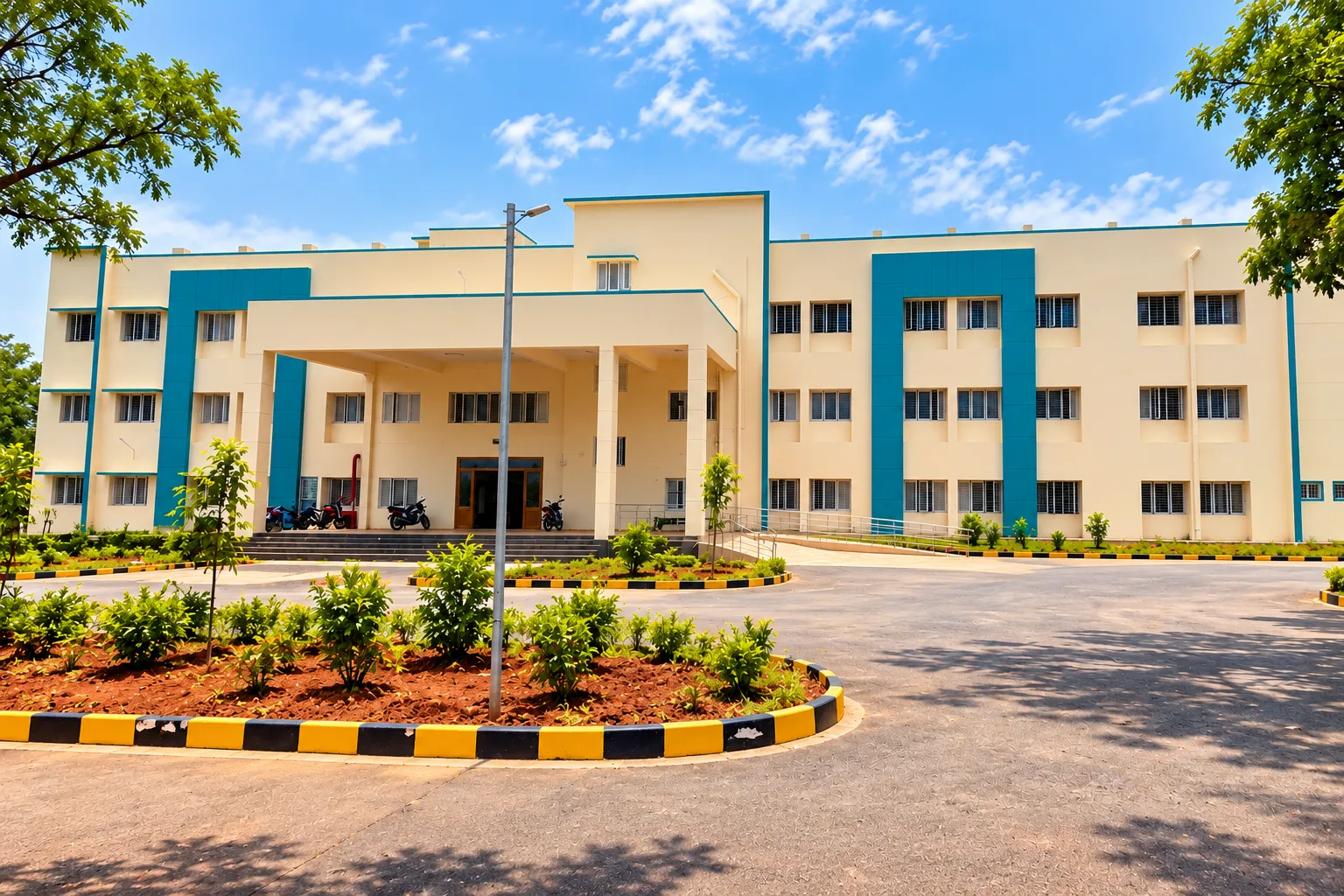
More than fifty years after Gandhi Maligai opened, the hospital's major functions were moved out and
expanded into the present-day Main Government Hospital near Soorakudi — known about the town
simply as the Soorakudi GH. It is the principal public hospital serving Karaikudi and the
villages around it, and it carries a referral load from well beyond the taluk boundary.
Gandhi Maligai still stands and is still how people give directions.
The Soorakudi GH does not stand alone; it sits near the top of a pyramid that most people meet long before
they meet it. Tamil Nadu's public health structure runs upward from the Health Sub-Centre in a
cluster of villages, to the Primary Health Centre with a medical officer and beds, to the upgraded
PHCs and taluk hospitals, to the district headquarters hospital, and finally to a medical college
hospital. Alongside it runs a parallel network of government Siddha and Ayurveda dispensaries under
AYUSH.
This is worth spelling out because Tamil Nadu's version of it is unusually good and is studied nationally
for that reason. The state built out primary care rather than concentrating everything in city hospitals,
and it fixed the supply problem: the Tamil Nadu Medical Services Corporation, set up in 1994,
centralised drug procurement across the whole public system on an essential-drugs list of a few hundred
items, buying by open tender and delivering to district warehouses. It cut costs by around thirty per
cent and, more importantly, made near-total availability of basic medicines normal in a government
hospital.
For a family in a village outside Karaikudi, that is the difference between a prescription and a
treatment.
1994TNMSC founded; centralised, tendered drug procurement for the whole state system
~30%cost reduction on public drug procurement, widely cited as a national model
2012Government Sivagangai Medical College opens, 100 MBBS seats
1940Karaikudi’s first government hospital — seventy-two years earlier
The Medical College at Sivagangai
The single biggest change to health care in this district in living memory is recent. Government
Sivagangai Medical College and Hospital was established in 2012, affiliated to the Tamil Nadu
Dr. M.G.R. Medical University, and began with an annual intake of a hundred MBBS students.
A medical college changes a district twice over. It gives the attached hospital the specialists, the
equipment and the round-the-clock cover that a district hospital on its own struggles to justify — so
the standard of care available without travelling to Madurai rises. And it trains doctors locally, from
families in the district, a proportion of whom stay. Before 2012 a young person from Karaikudi who wanted to
study medicine left; a good number now do not have to.
It is about forty kilometres from Karaikudi to Sivagangai town — near enough to matter, far enough
that the Soorakudi GH remains the working hospital for this taluk.
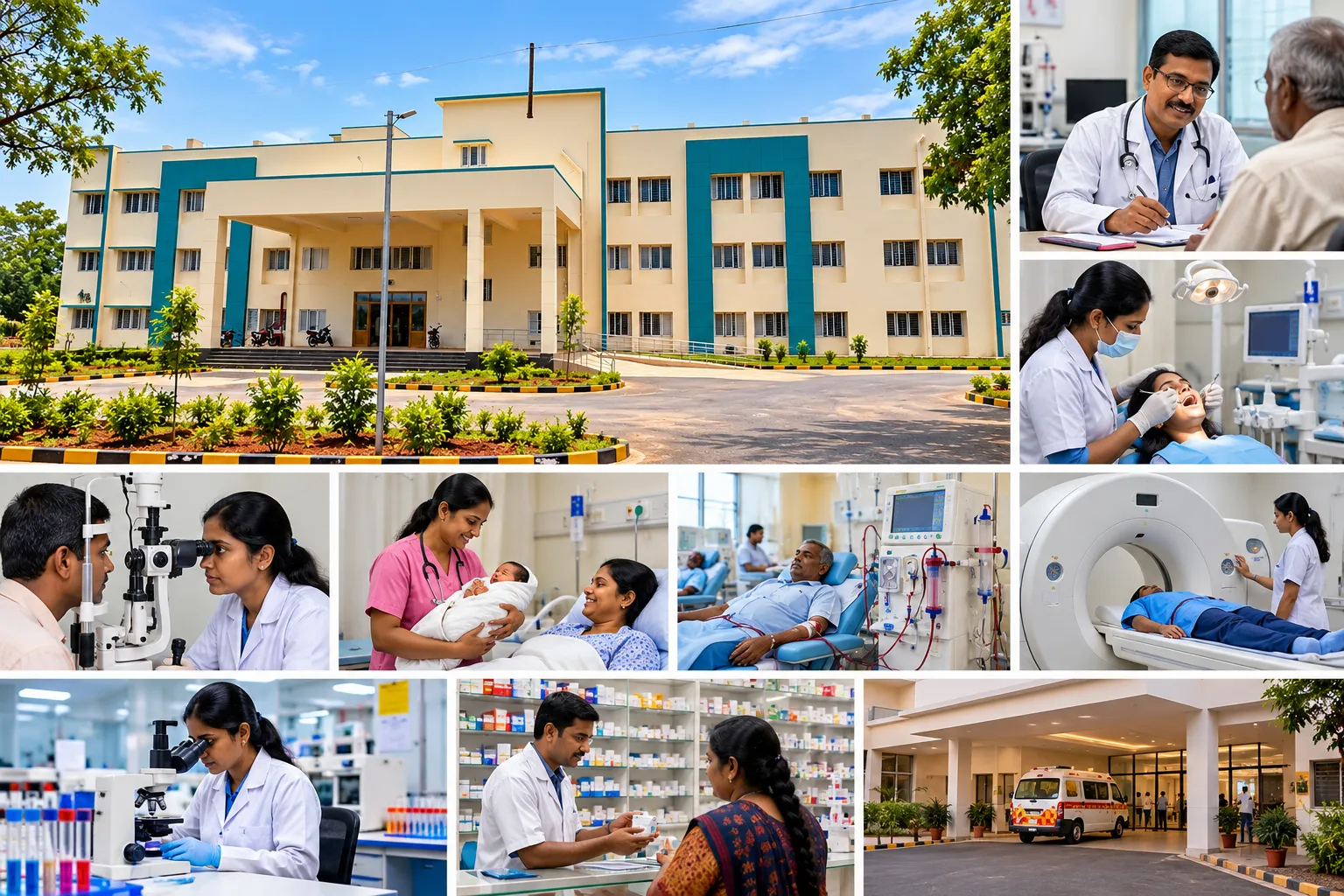
Alongside the Government hospital, Karaikudi supports private hospitals and nursing homes, general and
specialist clinics, dental and eye care, maternity services, dialysis, diagnostic laboratories and
pharmacies — the ordinary provision of a district town, at a density rather above what a town of a
hundred thousand usually manages.
That density is the point. It is the reason families from the surrounding taluks come here for a
consultation rather than travelling 80–90 kilometres to Madurai or Tiruchirappalli, and it is one
of the concrete things people mean when they say Karaikudi is the best place in the district to
live.
Two ordinary things underpin it and are easy to miss. The first is the pharmacy trade: a town
with this many clinics has the retail chemists to match, which is why a prescription can usually be
filled the same hour. The second is milk — the town has an Aavin dairy, and a reliable cold chain for milk in a place that reaches 37 °C
is a public health asset whether or not anyone files it under health.
Facilities, timings and specialities change; this page does not attempt a directory. For what is open
now, a local search or a call ahead will serve better than any list.
The pattern that built the colleges did not stop with colleges. It reached medicine, late but at
scale.
M.A.M. Ramasamy of Kanadukathan — industrialist, philanthropist, and one of the Chettinad
names on the personalities list — initiated the medical
college and hospital that became the Chettinad Academy of Research and Education. It sits at
Chettinad Health City at Kelambakkam on Rajiv Gandhi Salai (OMR), south of Chennai, was granted deemed
university status in 2008, and is accredited A++ by NAAC. Its constituent Chettinad Hospital and
Research Institute trains doctors, nurses and allied health professionals in numbers.
Its main campus is not in Karaikudi, though CARE has since opened a campus at Kanadukathan teaching
pharmacy, physiotherapy and allied health sciences. But it is the same family
instinct, a generation after Alagappa Chettiar: a fortune made in trade, turned into a teaching
institution, with the community's name on it. The nineteenth century built temples, the twentieth built
colleges, and the twenty-first has been building hospitals.
Temples, then colleges, then hospitals. The instinct has not changed in three hundred years; only the
thing it was thought most useful to endow.
The Chettinad pattern
Part ThreeThe older systemsSiddha, the AYUSH councils, and a spice cabinet that has always doubled as
something else.
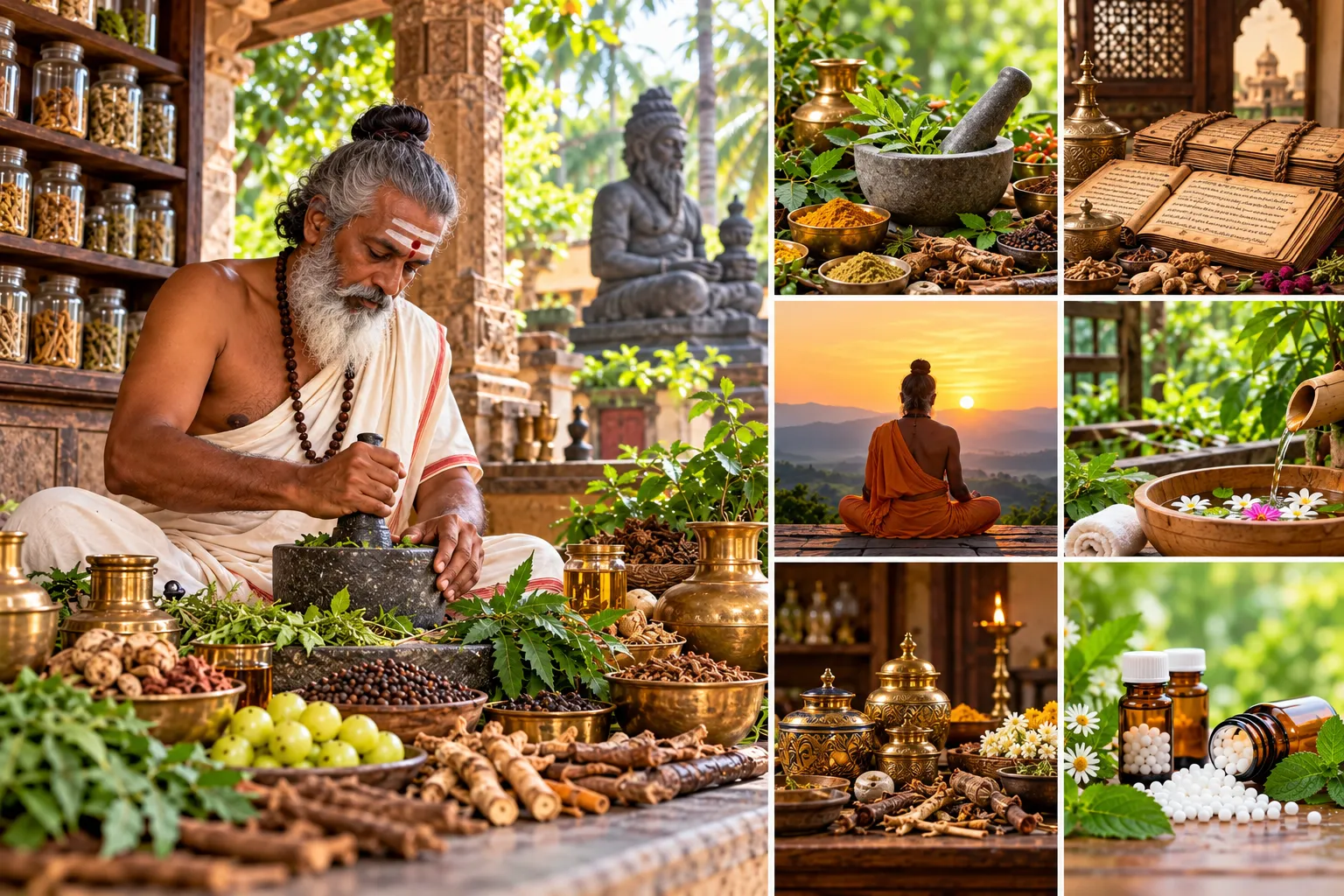
Siddha is the indigenous medical tradition of the Tamil country, and one of the systems
recognised nationally under AYUSH alongside Ayurveda, Unani, Yoga and Naturopathy, Sowa-Rigpa and
Homoeopathy. Across the Chettinad region these sit beside allopathic practice rather than apart from it
— a household keeps to its own remedies for small complaints and goes to a doctor for anything
serious.
Practitioners of the traditional systems hold their own degrees and are registered with their councils.
A Siddha or Ayurvedic physician here is a qualified professional, and worth asking for credentials in
exactly the way you would of any other.
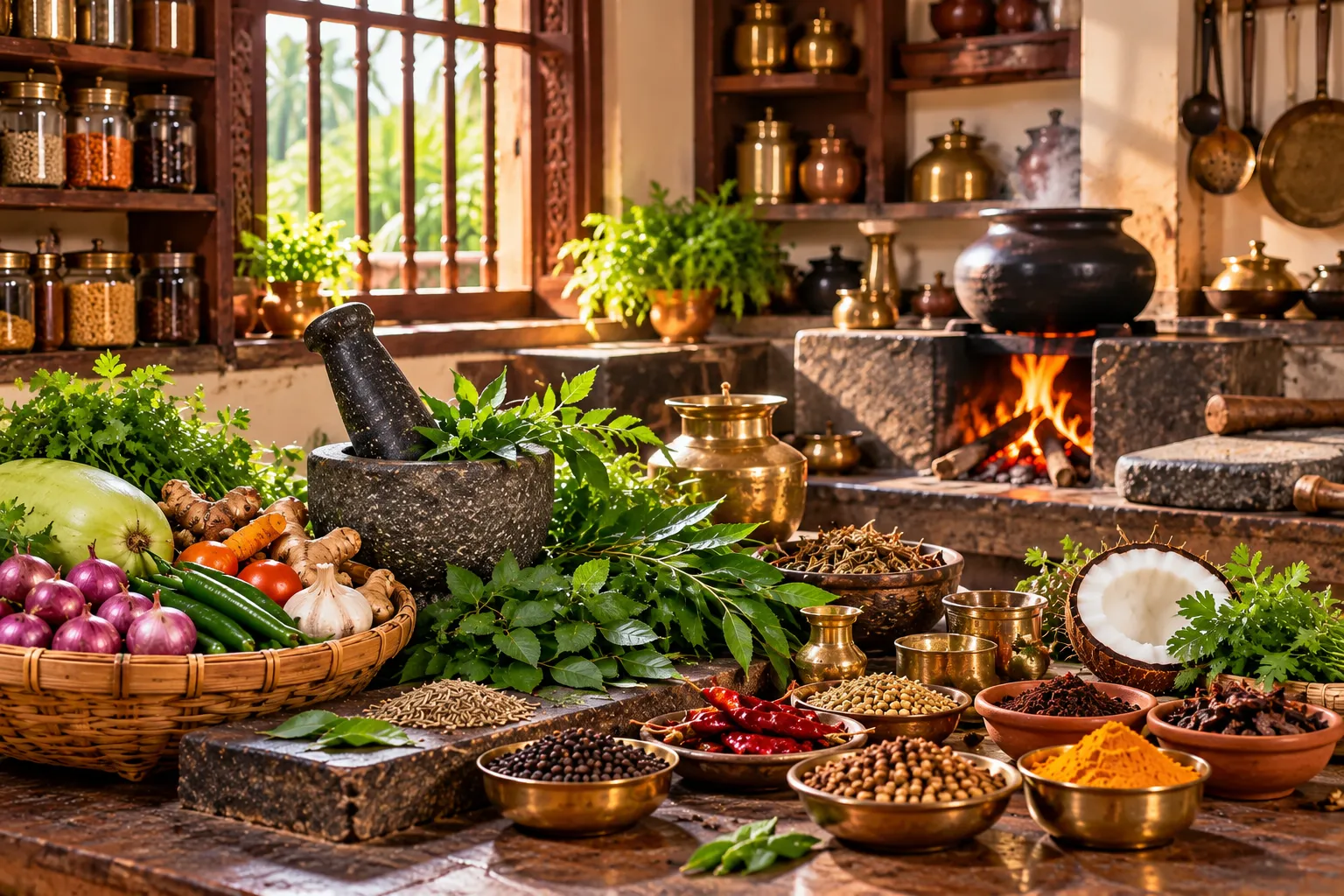
Much of the older practice in Chettinad lives in the kitchen rather than the dispensary. The spice
cabinet is not only a flavour system: black pepper, dried ginger, kandathippili (the dried root-stem of long pepper),
fenugreek, cumin, fennel, garlic and turmeric are kept at home for the complaints they are traditionally
indicated for, and the everyday preparations show it. Milagu rasam, the pepper broth given for a
cold, is medicine served as lunch.
The preservation habits come from the same place. Sun-dried meats, salted and sun-dried vegetables,
dried fish and long-keeping pickles are what a semi-arid region with a short monsoon does about food
security — and also what a household did about nutrition through a lean season.
These are traditional household practices with a long record of use. They are not a substitute for
medical care, and nothing on this page should be read as a recommendation to treat anything at
home.
Put the pieces together and the reputation explains itself. A water table better than the surrounding
country's and a municipal supply from a spring. Houses built to catch their own drinking water. A government
hospital since 1940 and, since its functions moved to Soorakudi, a referral hospital. A private sector deep enough that most things
can be dealt with without leaving the taluk. A literacy rate above 90 per cent, which is itself among the
better predictors of health outcomes anywhere. And a food culture with preservation and pharmacology built
into it.
Add to it a public system that works better than most Indian states manage, a medical college forty
kilometres up the road since 2012, and a tradition of domestic practice that handles the small things before
they become large ones.
None of that is dramatic. It is the accumulation of a century of unglamorous decisions — a bund here,
a spring tapped there, a hospital opened, a college endowed, a drug procurement system reformed — and
it is why a town of this size in a dry district is one people move towards rather than away from.
It is also, plainly, incomplete. A semi-arid district on a short monsoon has a water problem that gets
harder, not easier; the private sector is uneven; and the specialist who is not in Karaikudi is still
80–90 kilometres away. The honest claim is comparative, not absolute: this is a good place to live for a
town of its size in this part of Tamil Nadu, which is what people actually mean when they say it.
87 cmannual rainfall, about 60% of it from the northeast monsoon
1940Gandhi Maligai opened on 26 May by C. Rajagopalachari
90.49%literacy at the 2011 Census — among the better predictors of health outcomes
~80–90 kmto Madurai or Tiruchirappalli — the distance the local hospitals save
This page describes health and care in Karaikudi in general terms, drawn from the town's own
history. It is not medical advice and it is not a directory of providers. Descriptions of Siddha and
other traditional practices are given as cultural and historical background, not as treatment
recommendations. For any health concern, consult a qualified practitioner; for a particular hospital or
clinic, contact them directly for current information.