Skip to content

Events

The year in Karaikudi

The Tamil year opens in Chithirai, not January. What follows is the whole round of it as this town keeps it — chariot festivals that close the roads, a pilgrimage walked on foot, a book fair, an open day at a national laboratory, and the household festivals in between.

Twelve Tamil months · twenty-one gatherings · dates shift each year against the Gregorian calendar

Calendar — jump to an event

A festival calendar is the most honest description of a place. It records what a town believes, what it grows, when it has money, and who it expects to come home. Karaikudi's runs on the Tamil year, which begins in Chithirai in the middle of April, and it takes in temple chariots, a walk of some 160 kilometres, a fire-walk, a doll display, a book fair and a national laboratory throwing open its gates.

Part One Chithirai to Aani சித்திரை · வைகாசி · ஆனி
Mid-April to mid-July — the year opens, and the chariots come out in the hottest weeks of it.
Tamil New Year Illustration, generated

Mid-April · Chithirai 1

Puthandu — the Tamil New Year

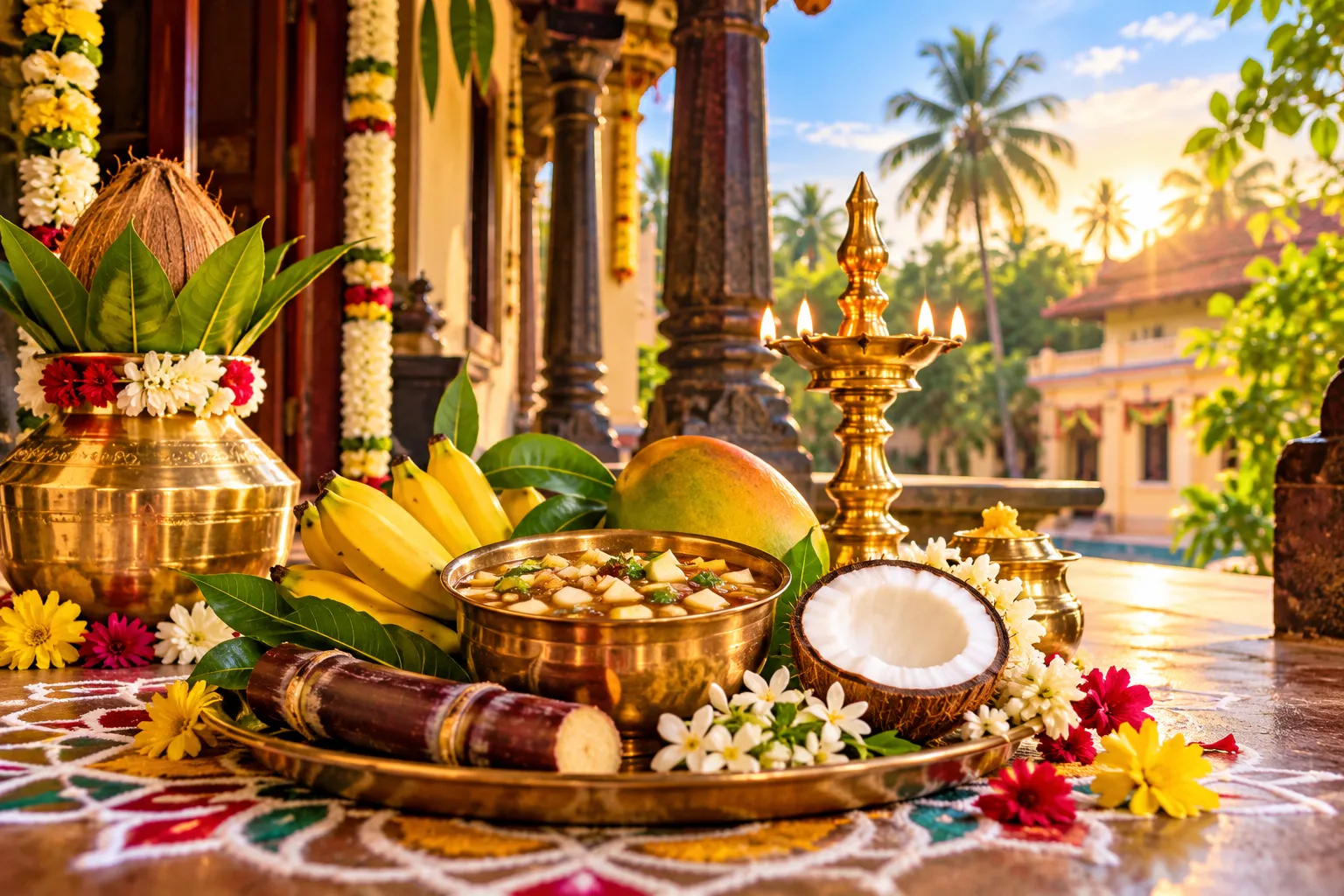
The first day of Chithirai, usually 14 April, opens the Tamil year. Houses are cleaned and the threshold drawn with kolam; the kani is arranged the night before so that the first thing seen on waking is auspicious — gold, rice, fruit, a mirror. The festival meal turns on mangai pachadi, which carries all six tastes at once, sweet and sour and bitter together, on the reasoning that the year ahead will too.

In Karaikudi the day is kept with particular grandeur at the Koppudai Nayaki Amman temple, and draws large numbers in from the surrounding villages.
the temple, in full

The Chithirai festival season Illustration, generated

April – May · Chithirai

The Chithirai season

Chithirai is the festival month of the Tamil country, and across Chettinad the village temples take their turn: flag hoisting, ten days of ritual, a float on the tank where there is one, and a chariot at the end. It falls in the hottest weeks of the year, which is not an accident — the agricultural calendar is empty, the granaries are still full from Thai, and a community that spent much of its history working overseas fixed its great gatherings for the season when people could actually travel.

For a visitor this is the month to come. For a Karaikudi family with relatives in Chennai, Singapore or Kuala Lumpur, it is the month they are expected.

Chithirai Thiruvizha at Madurai Illustration, generated

April – May · Chithirai · Madurai

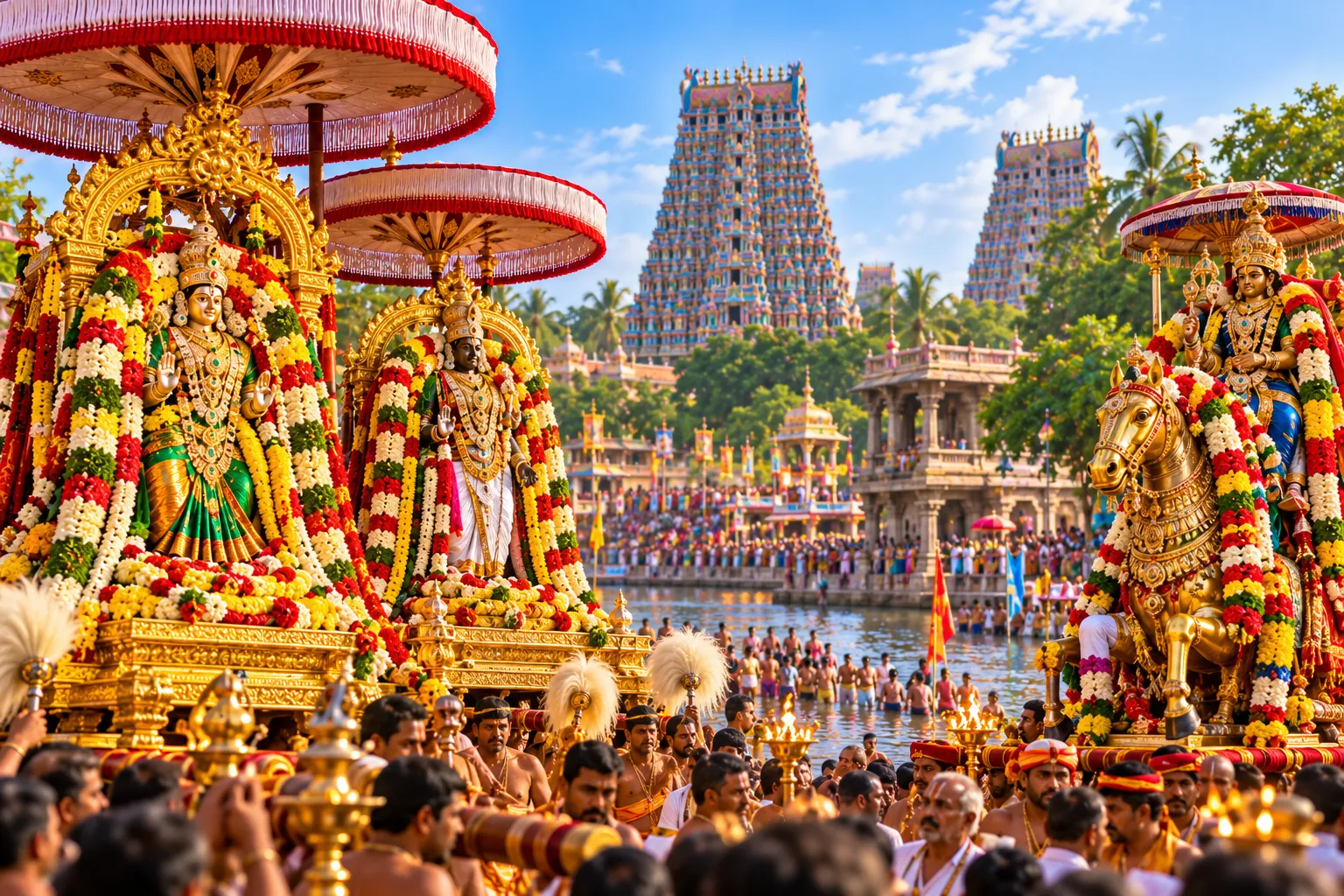
Chithirai Thiruvizha at Madurai

About 80 kilometres west, Madurai keeps the largest festival in the region: the Chithirai Thiruvizha, running for the better part of a month around the celestial wedding of Meenakshi and Sundareswarar, and the journey of Kallazhagar into the Vaigai. It regularly draws crowds in the millions.

It is not a Karaikudi festival, but it belongs on a Karaikudi calendar: the town is roughly equidistant from Madurai and Tiruchirappalli, and families here travel for it as a matter of course.

Sri Koppudai Nayaki Amman, Karaikudi Illustration, generated

April – May · Chithirai–Vaikasi · ten days

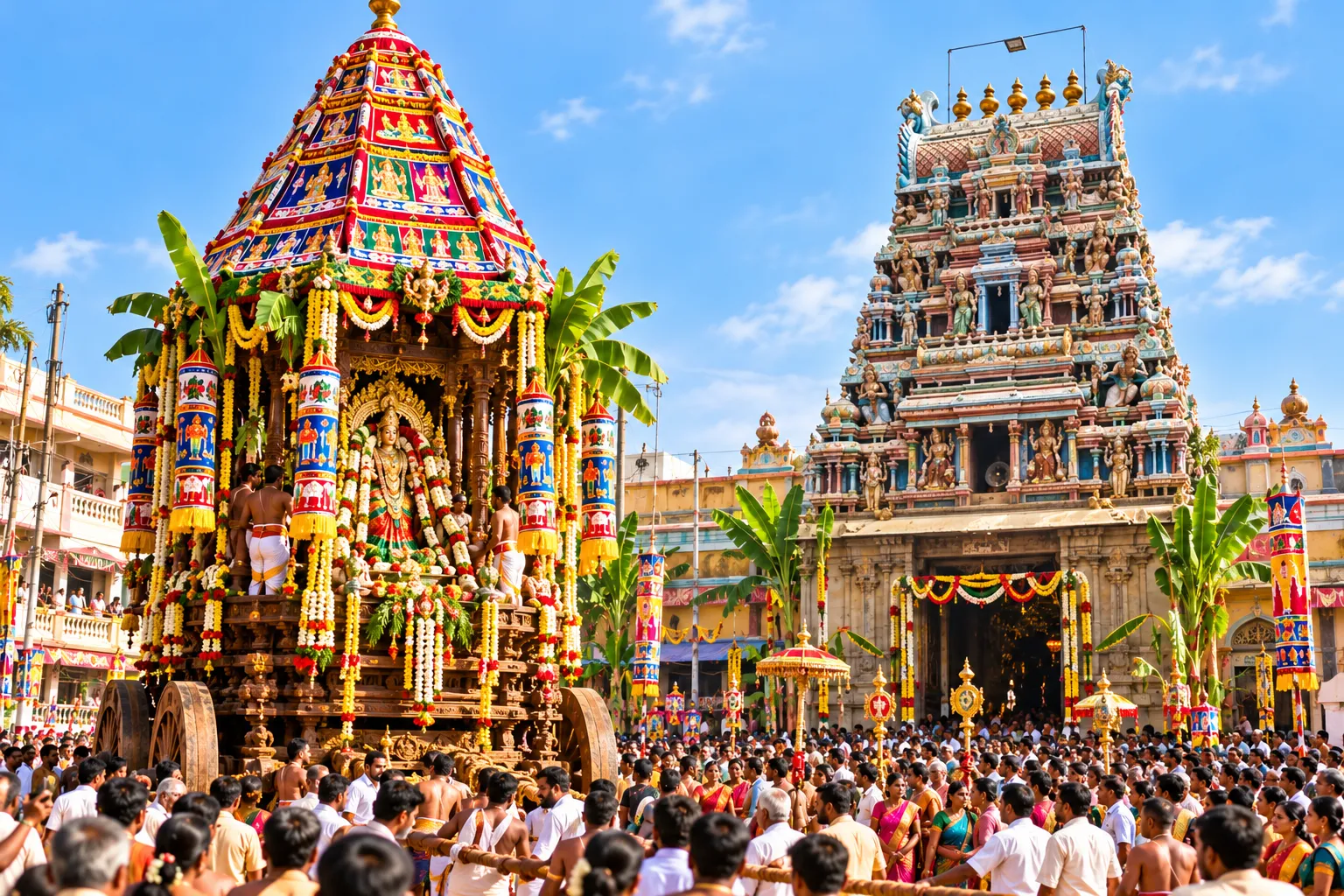
Koppudai Nayaki Amman kovil Thear Thiruvizha

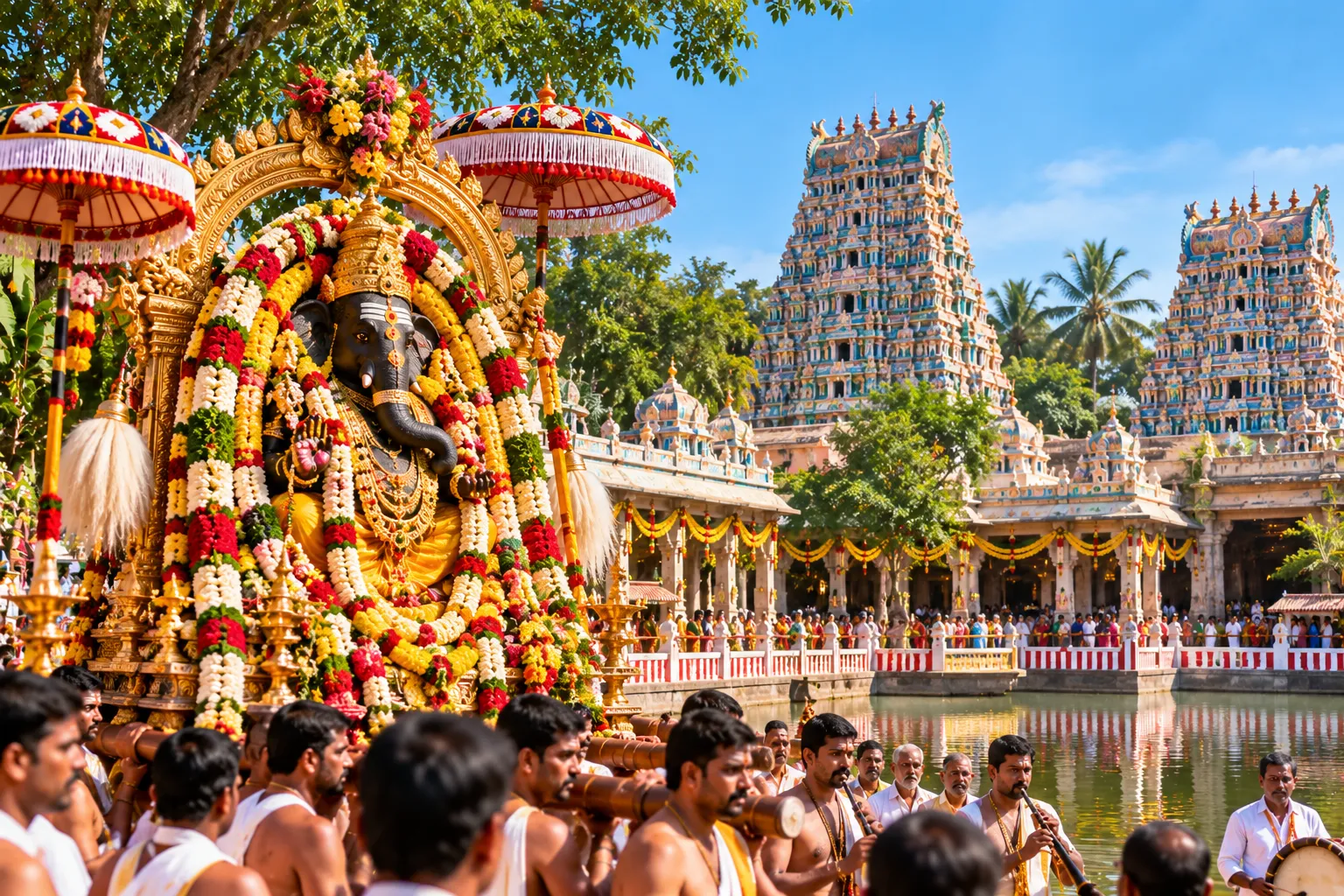
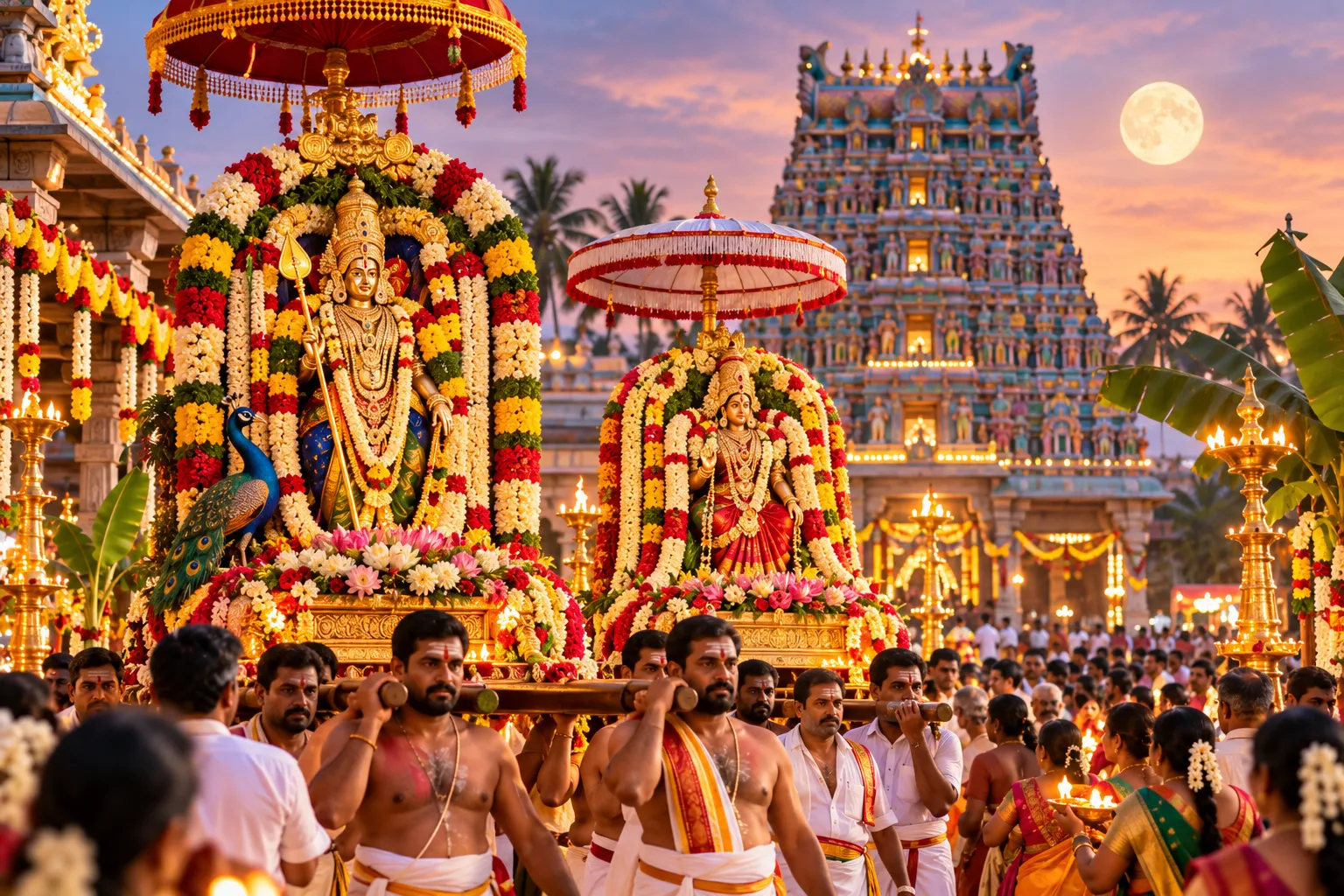
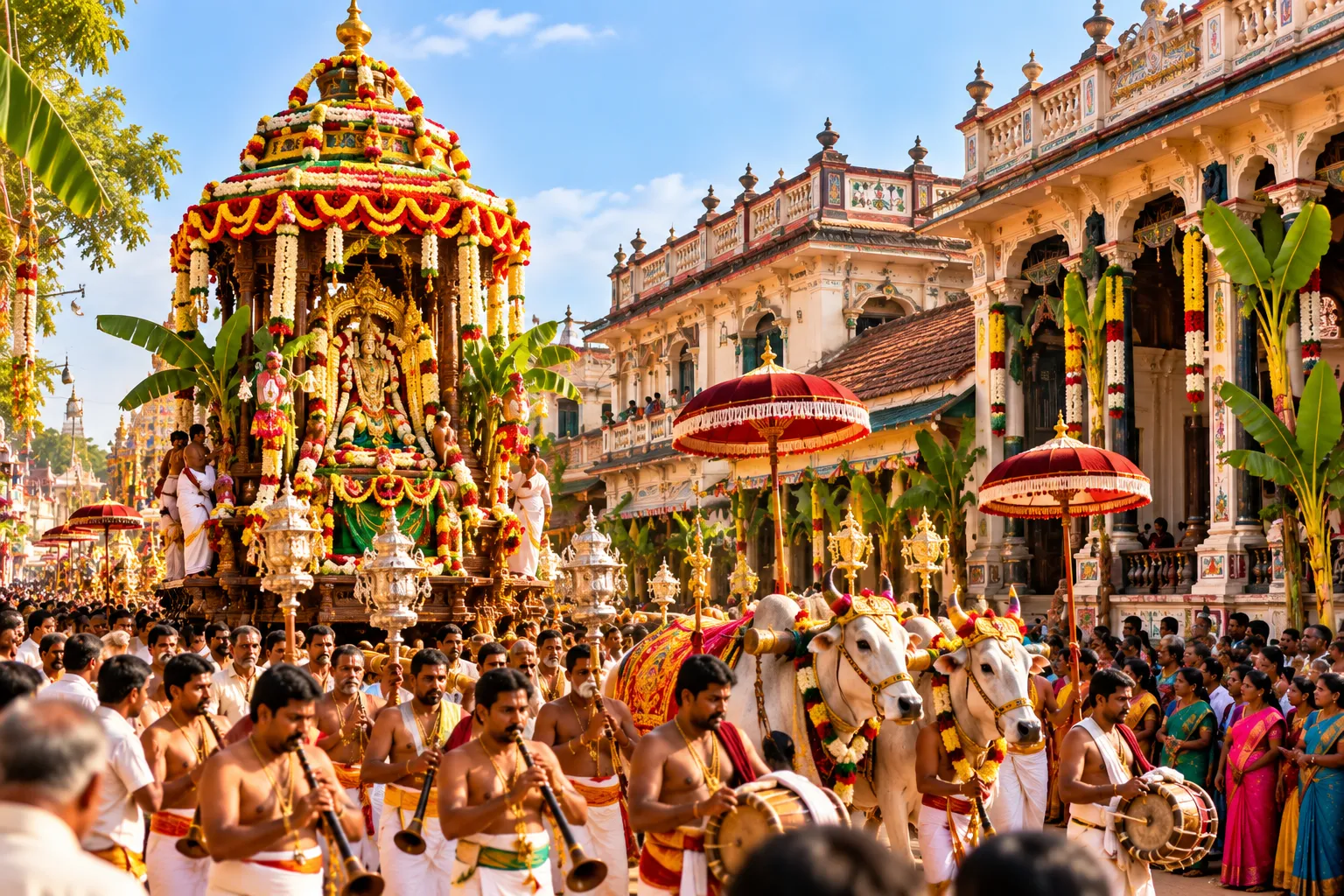
Sevvai Perum Thiruvizha, the grand Tuesday festival, runs for ten consecutive days from the last Tuesday of Chithirai into the first week of Vaikasi. It opens with kodi yetram, the flag hoisting, takes in the theppa thiruvizha on the temple tank and poochorithal, the flower offering, and concludes with the grand thear thiruvizha — the temple car drawn around the temple as far as the Kattamman temple at Senjai, to be returned the next day.

This is the town's own festival, for the town's own deity, and it has one feature few other temples share: the moolavar itself — the presiding image from the sanctum — comes out for the celebration, rather than the processional deity that ordinarily stands in for it. Devotees compare it with the Nataraja of Chidambaram.

full story

Lord Murugan Illustration, generated

May – June · Vaikasi, Visakam star

Vaikasi Visakam

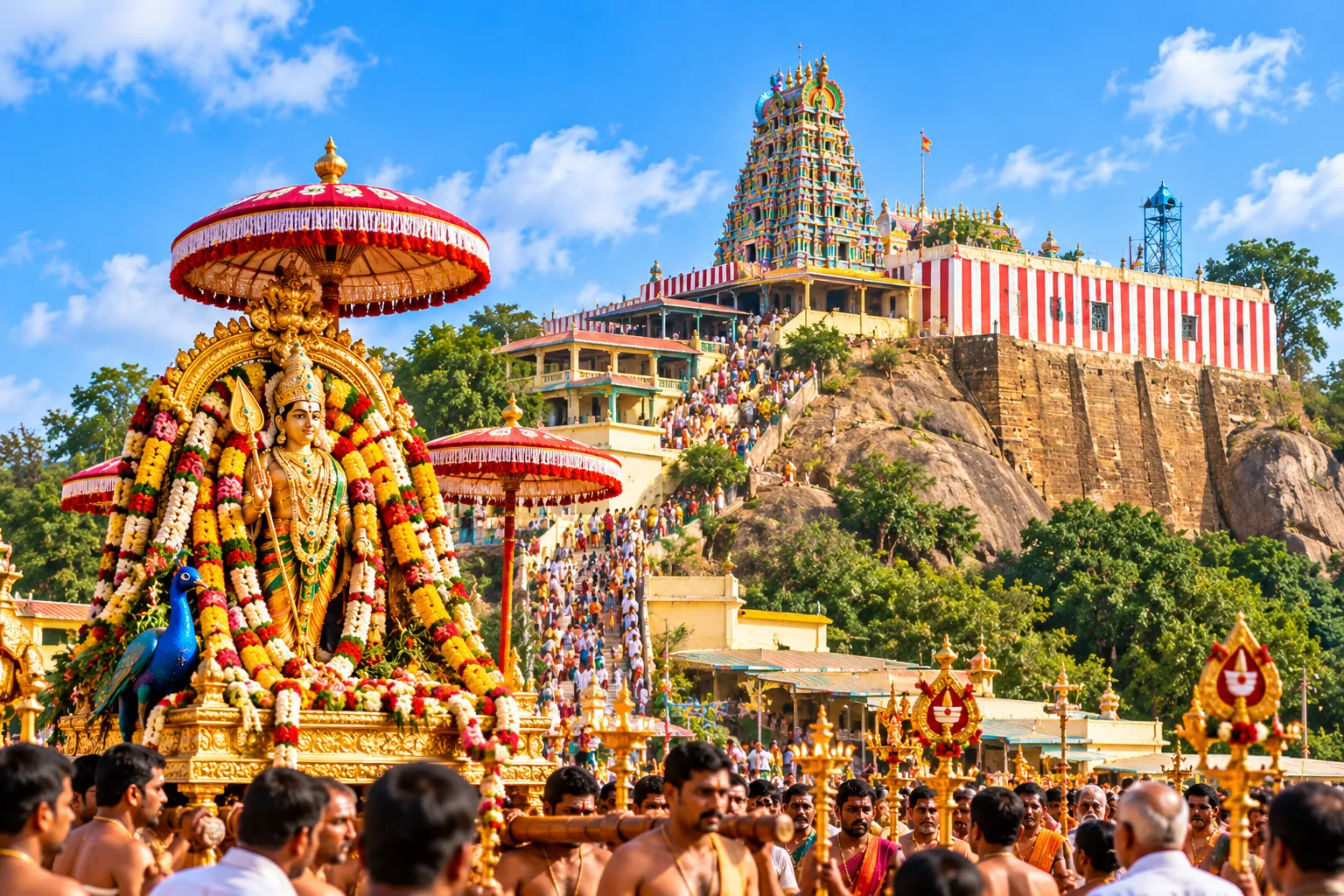
The birth star of Lord Murugan, kept on the Visakam nakshatra in the month of Vaikasi. Murugan is the household god of much of the Tamil country and particularly of this region, and the day is observed at every Murugan shrine in the district with abhishekam, special worship and the offering of panchamirtham.

At Pillaiyarpatti, the Brahmotsavam of the Karpaga Vinayakar temple also falls in Vaikasi.

the Pillaiyarpatti temple

Part Two Aadi to Purattasi ஆடி · ஆவணி · புரட்டாசி
Mid-July to mid-October — water, the goddess, and the months when the household festivals take over from the temple ones.
Guru Poornima Illustration, generated

June – July · the Ashadha full moon, in Aani or Aadi

Guru Poornima

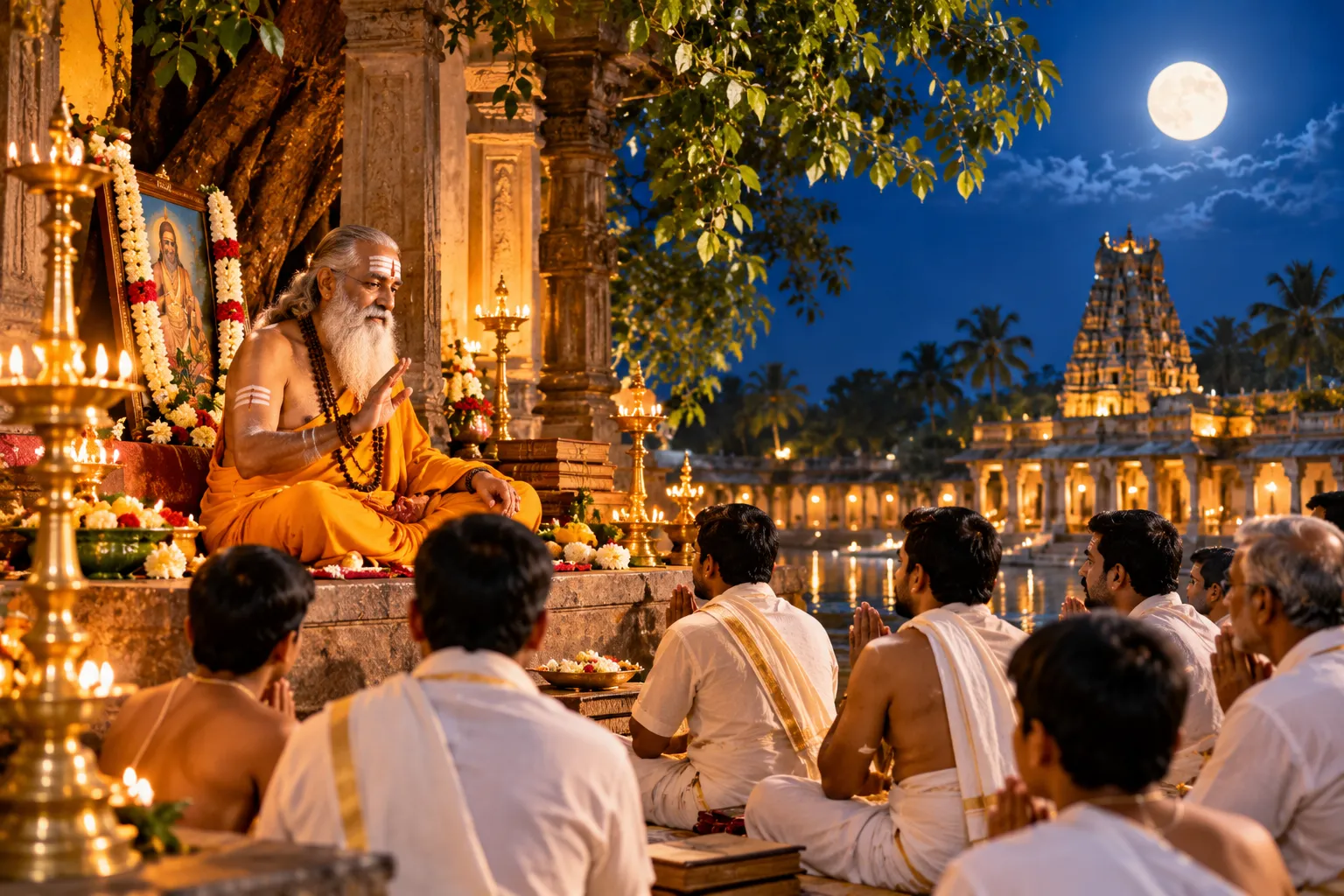
The full moon kept in honour of the teacher. It is observed at the monastic seats of the region — the Koviloor Aadheenam, the Vedanta Math at Kalaiyarkovil, the Kundrakudi Adheenam — where the relationship between teacher and student is the institution itself rather than a sentiment about it.

In a town whose entire modern history turns on people who endowed schools, the day reads less as a religious observance and more as the local civic religion.

the Koviloor Aadheenam

Aadi Perukku Illustration, generated

Early August · Aadi 18

Aadi Perukku

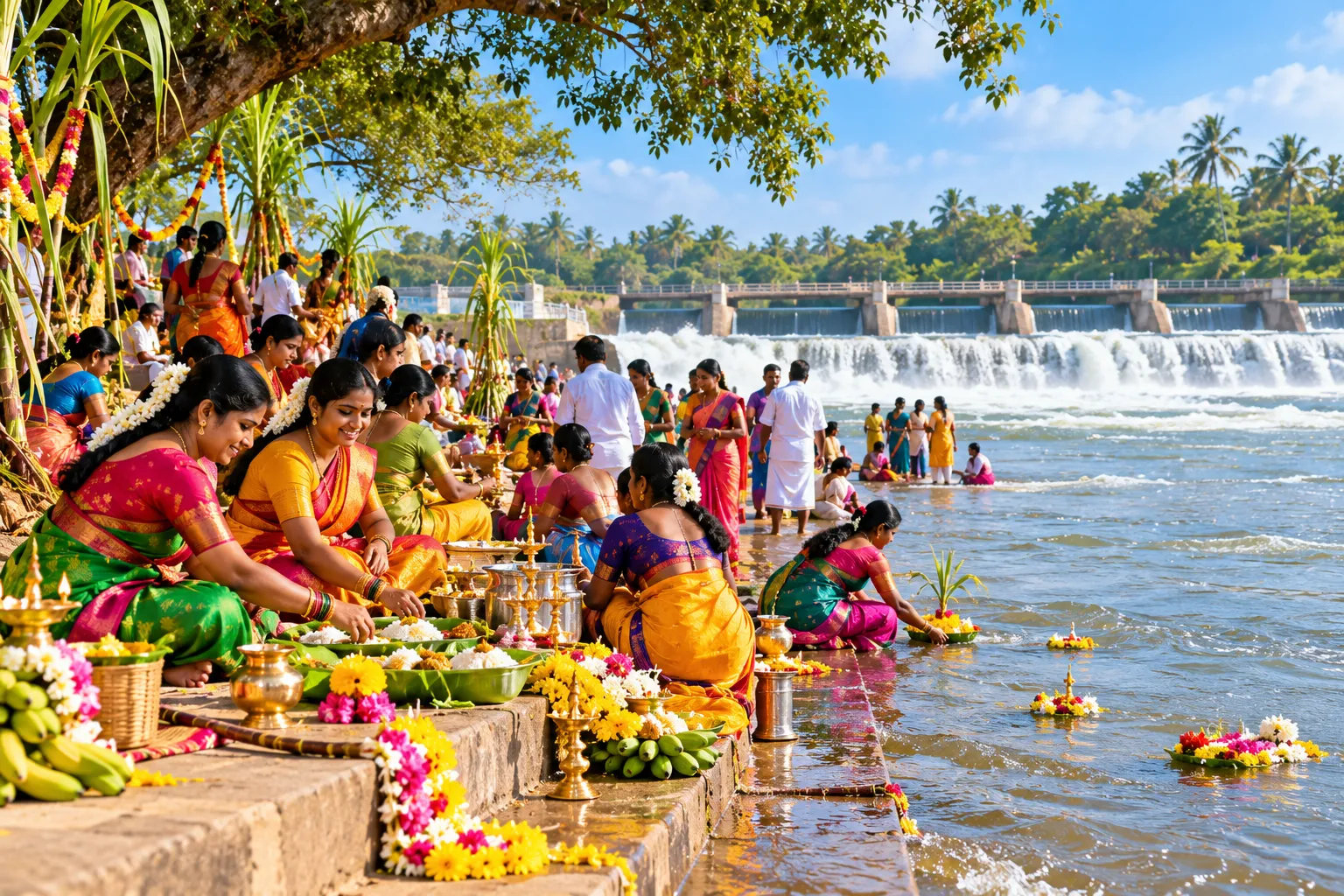
Pathinettam perukku — the eighteenth-day rising. On the eighteenth day of Aadi the rivers of Tamil Nadu are running full from the southwest monsoon in the hills, and the festival marks the swelling of the water: families go to the riverbank or the tank, cook and eat there, and give thanks to the water that will carry the crop.

In a district like this one it lands differently than it does on the Kaveri. Karaikudi has no great river near it — the Vaigai crosses the far side of the district, at Thiruppuvanam and Manamadurai. Here there is only the Thean aaru, the tanks and the kanmai, and the artesian spring at Sambai. Aadi Perukku here is a festival about a water table, and it is kept by people who know exactly how much rain fell.

the water of Karaikudi

Vinayagar Chaturthi Illustration, generated

August – September · Aavani

Vinayagar Chaturthi

The birthday of Ganesha, and in this district it has an address: Pillaiyarpatti, twelve kilometres from Karaikudi, where a six-foot Ganesha was cut in relief out of the living rock — by one reading around the fourth century, by another in the seventh. The temple keeps a ten-day festival, with the chariot drawn on the ninth day, and the crowds it draws are among the largest of the year anywhere in Sivagangai.

Closer in, the 108 Pillayar temple beside the Meenakshi Sundareswarar shrine holds a hundred and eight images of the god in one place — built, according to the town, by a single devotee in gratitude.

Pillaiyarpatti, in full

Navarathri Kolu Illustration, generated

September – October · Purattasi · nine nights

Navarathri and the Kolu

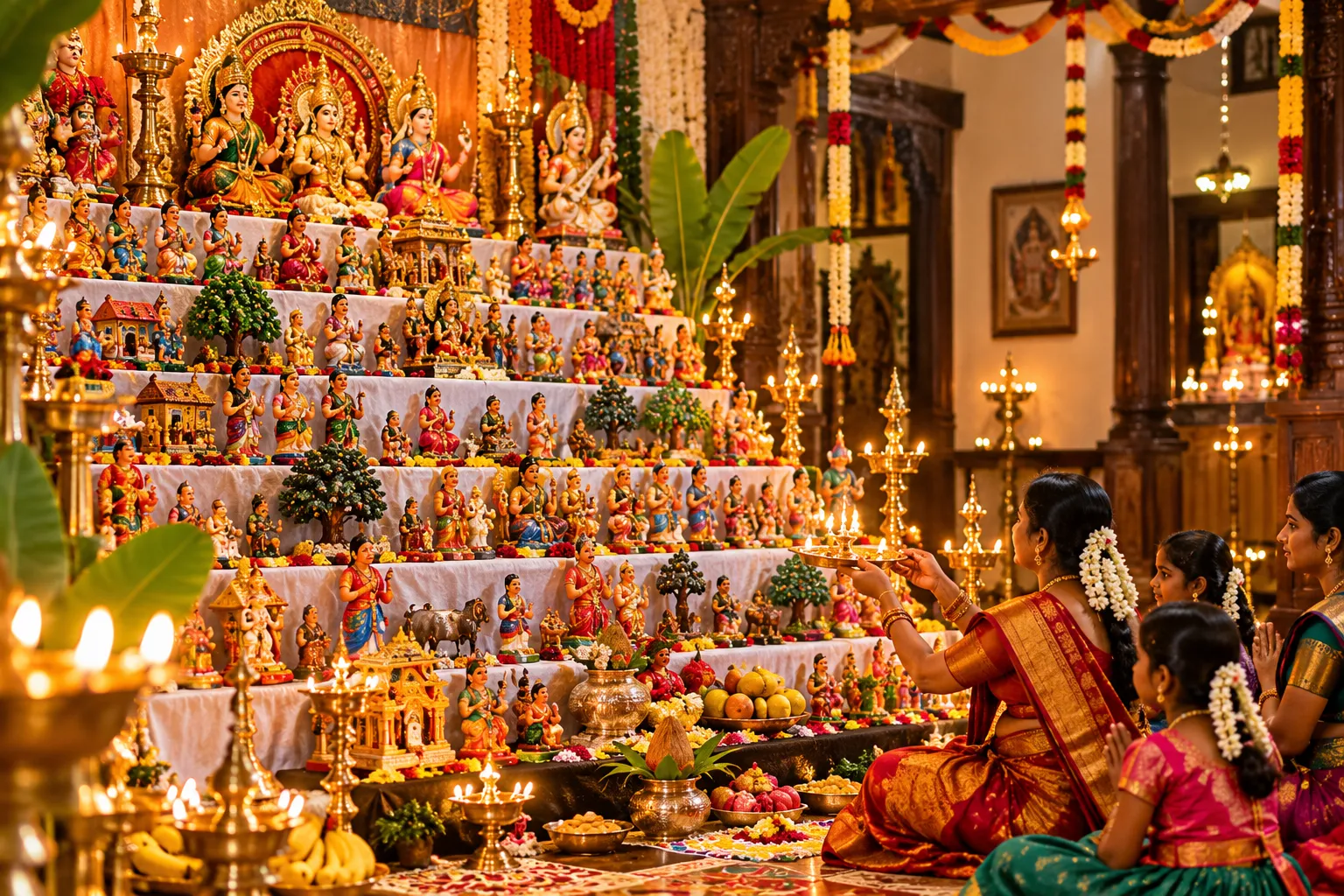
Nine nights for the goddess — three for Durga, three for Lakshmi, three for Saraswati — closing on Vijayadasami, the day traditionally chosen to begin a child's schooling or a new venture.

Its domestic form is the kolu: a stepped display, usually an odd number of tiers, on which the household's dolls are arranged — deities at the top, then saints and kings, then people and animals and the whole ordinary world at the bottom. Families visit each other's kolu through the nine evenings, sing, and are sent home with sundal and a small gift. In Chettinad houses, where the collections have been added to for generations and the ceremonial rooms are built for exactly this kind of visiting, it is done very well indeed.

the rooms it is kept in

Part Three Aippasi to Margazhi ஐப்பசி · கார்த்திகை · மார்கழி
Mid-October to mid-January — the northeast monsoon, the dark half of the year, and its festivals of light against it.
Deepavali Illustration, generated

October – November · Aippasi

Deepavali

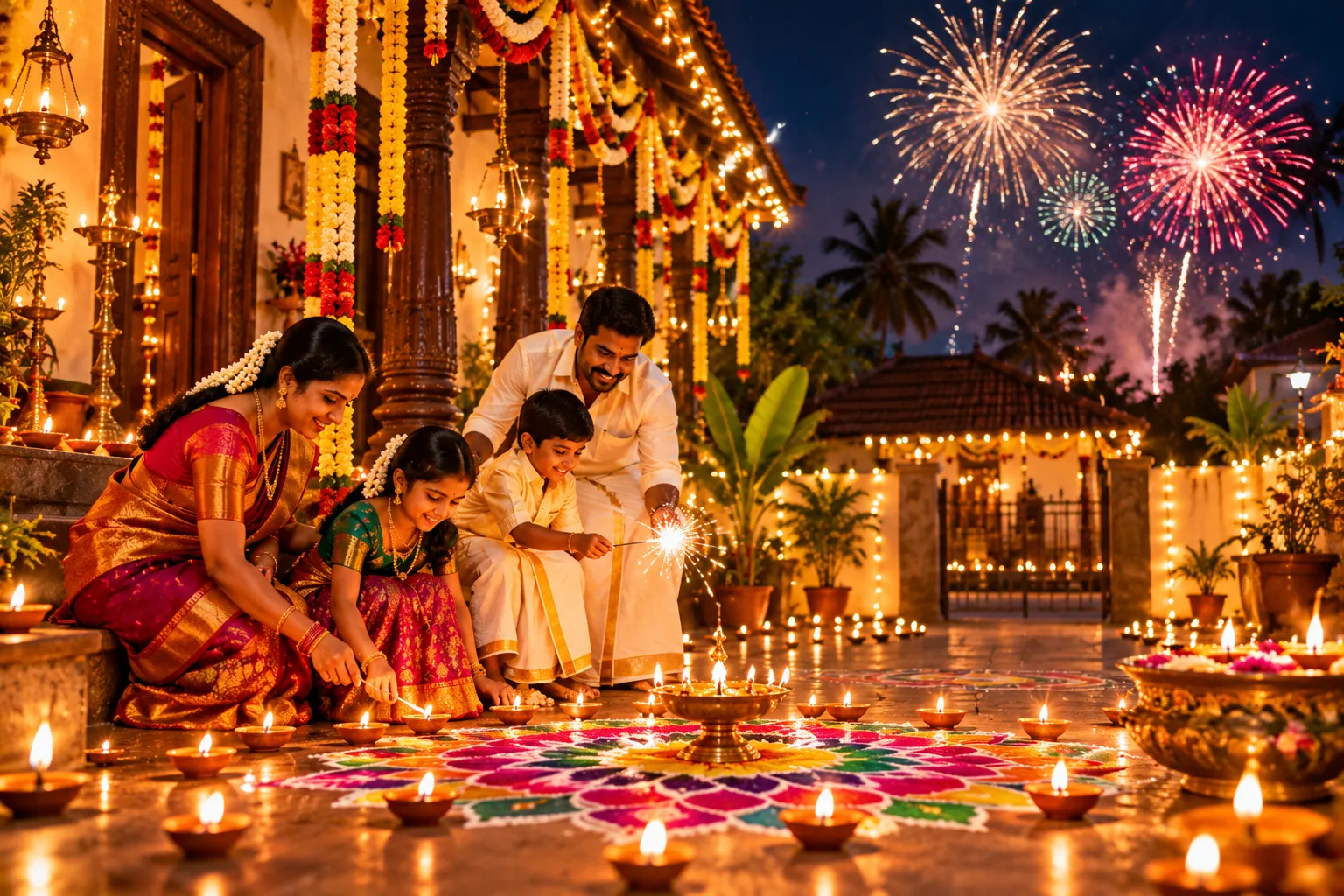
The Tamil observance is its own thing and starts early: the Ganga snanam, the oil bath before dawn, then new clothes, then Deepavali marundhu — a medicinal preparation of jaggery, dry ginger, pepper and other spices, eaten first, on the sound theory that a day of sweets and fried food is coming and the stomach should be prepared for it.

Commercially it is the biggest week of the Karaikudi year. The textile shops, the jewellers and the sweet stalls do a disproportionate share of their annual trade in the fortnight before it, and the finance houses lend against exactly that expectation.

lending in the town

Karthigai Deepam Illustration, generated

November – December · Karthigai, the Karthigai star

Karthigai Deepam

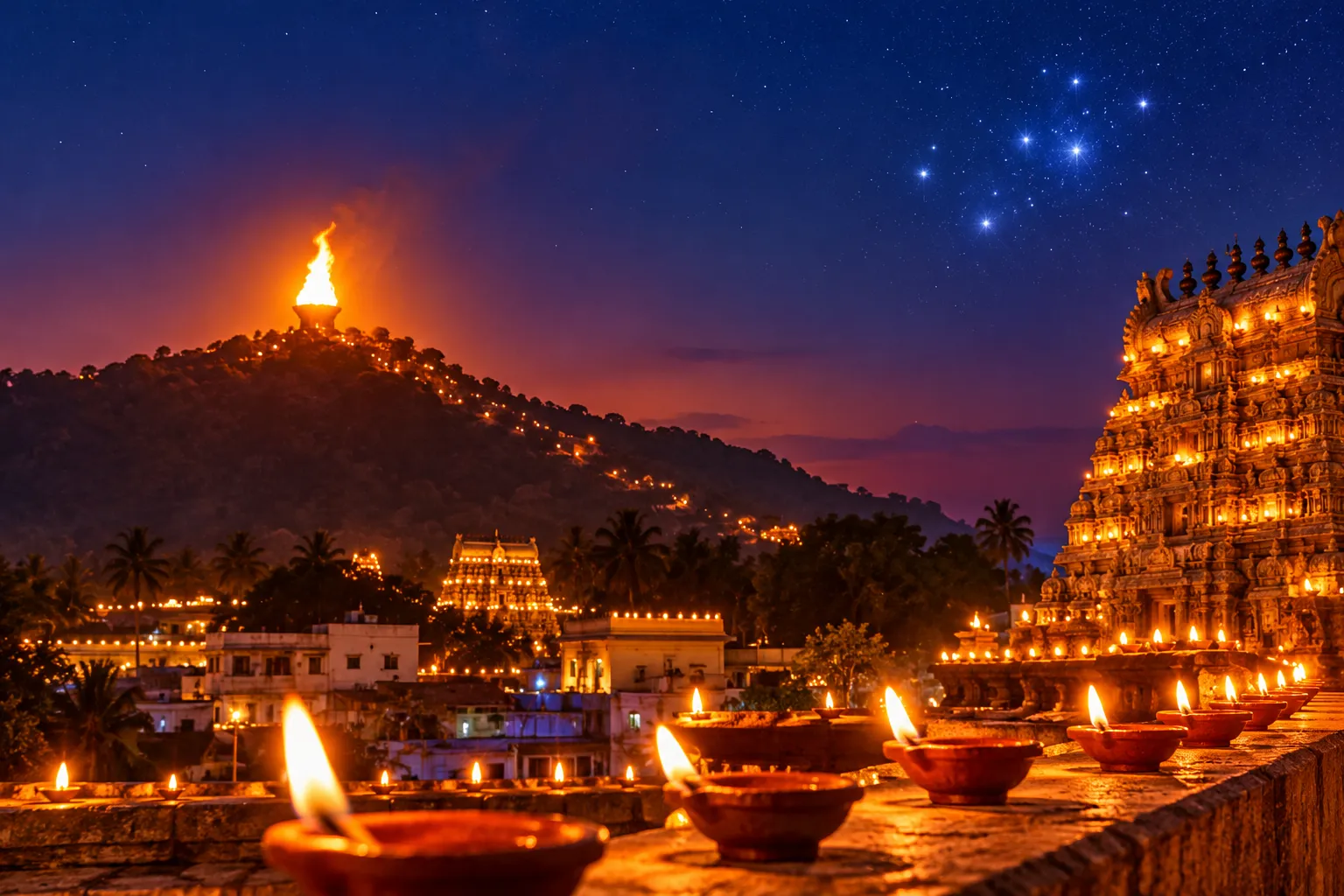
One of the oldest festivals still kept in the Tamil country — it is sung in Sangam poetry — and the simplest. On the Karthigai nakshatra of the month of Karthigai every house sets out rows of agal vilakku, small clay oil lamps, along the threshold, the wall and the courtyard edge, and leaves them to burn down.

A Chettinad house is unusually good at this. The courtyards are open to the sky and the corridors run the length of the building, so a house lit for Karthigai has lamps receding away from the front door through three or four quadrangles — which is, more or less, the effect the architecture was designed for.

The great public form of it is the beacon lit on the hill at Thiruvannamalai, visible for miles; Siva temples across this district light their own on the same night.

Arudra Darisanam Illustration, generated

December – January · Margazhi, Thiruvathirai star

Arudra Darisanam

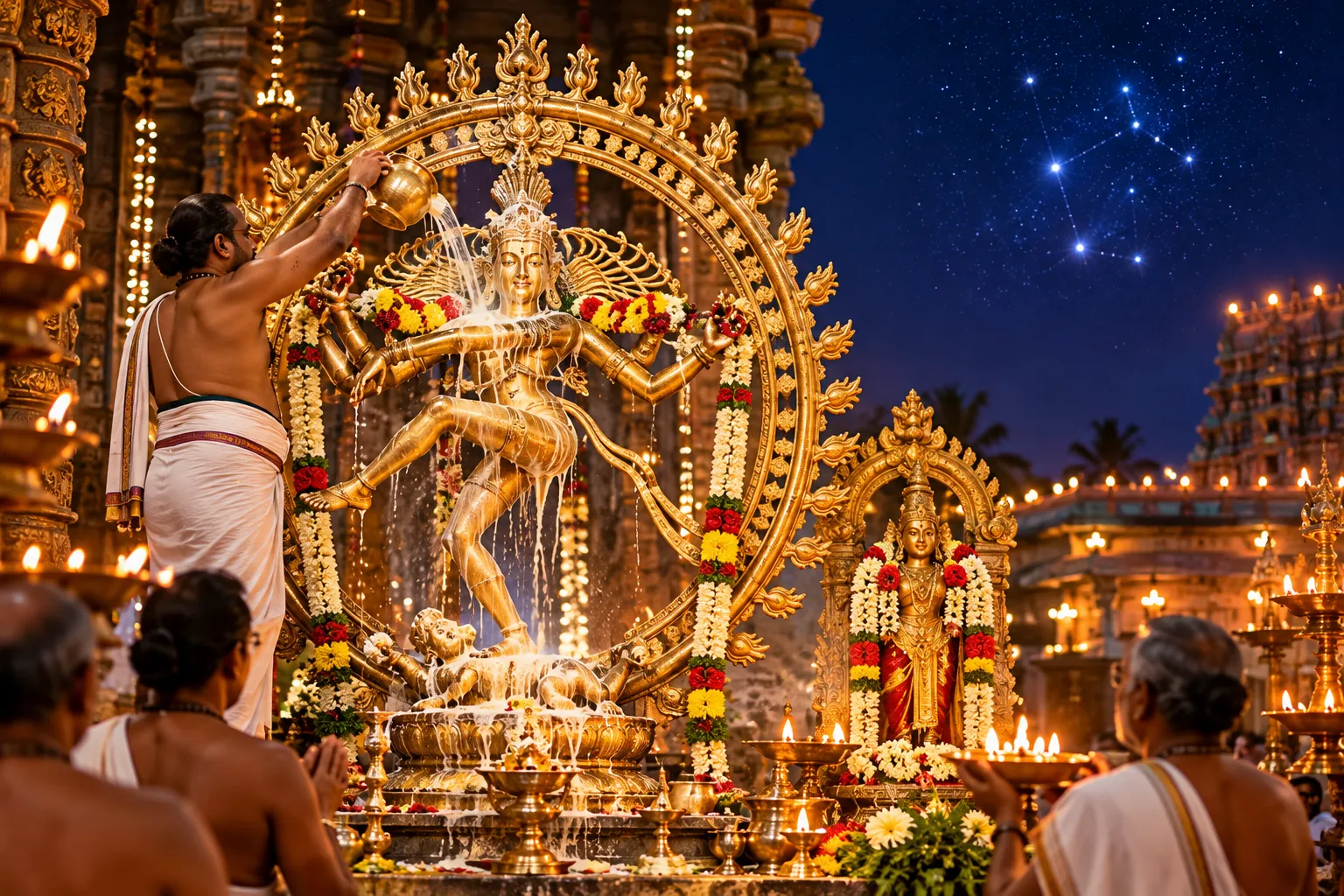
Margazhi is the devotional month — the month of early-morning song, of the Thiruppavai and the Thiruvempavai chanted before dawn, and of the largest concentration of Carnatic music anywhere in the world. Arudra Darisanam, on the Thiruvathirai star, is its high point: the day of the cosmic dance, when Nataraja is taken in procession.

For this region the month has an extra weight. Karaikudi has given Carnatic music the Karaikudi veena bani, Karaikudi Mani on the mridangam, and Ariyakudi Ramanuja Iyengar, who is credited with designing the running order that nearly every Carnatic concert still follows. In Margazhi, that inheritance is audible.

the Karaikudi veena

Part Four Thai to Panguni தை · மாசி · பங்குனி
Mid-January to mid-April — the harvest, the walking season, and the two greatest festivals this town keeps.
Pongal Illustration, generated

Mid-January · Thai

Pongal

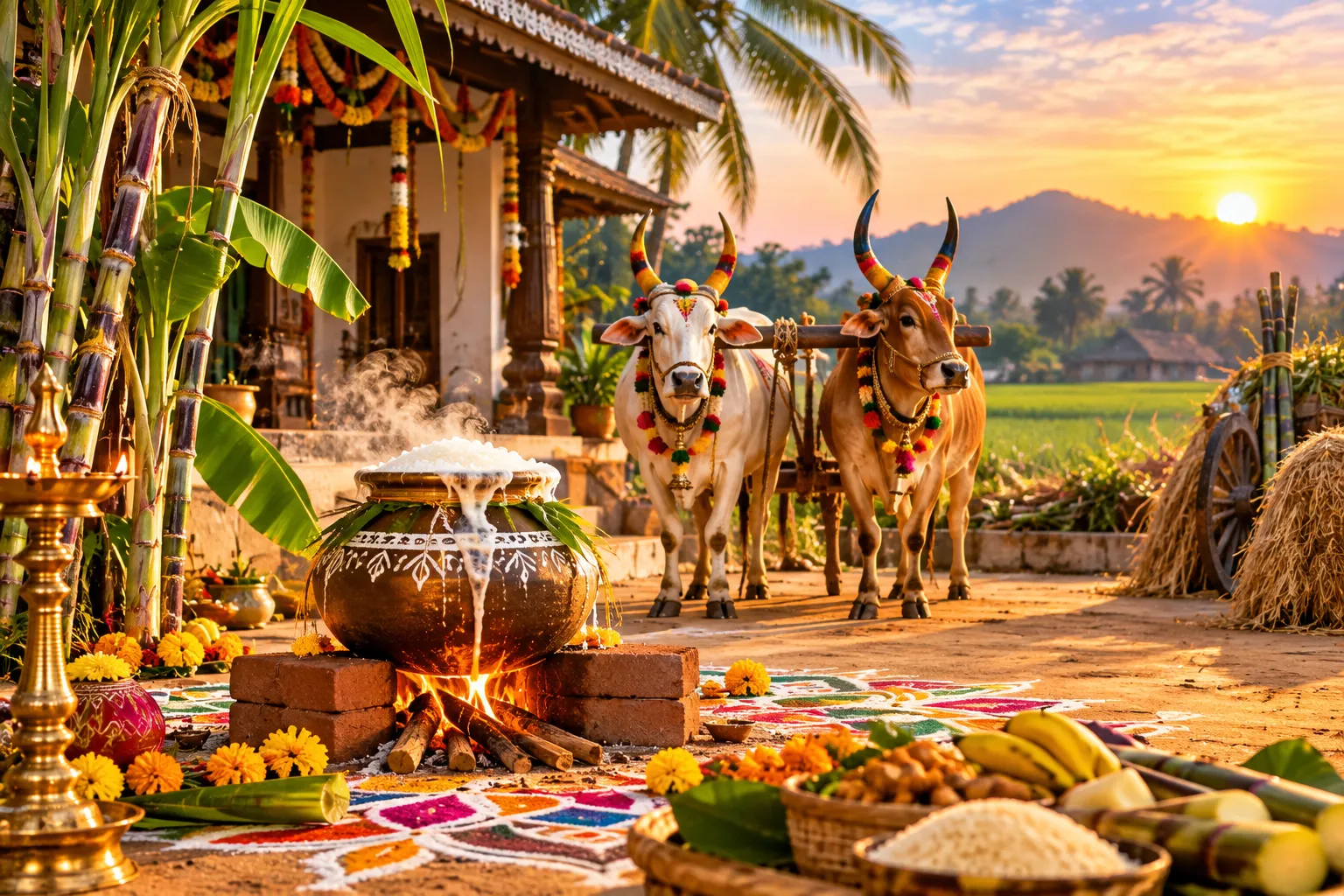
The harvest festival, and the one genuinely universal festival of the Tamil country — kept by everyone, and offered to the sun rather than to any temple deity. Four days: Bhogi, when the old is burnt and the house is cleared; Thai Pongal, when the first rice of the harvest is boiled in a new pot until it rises and boils over, and the household calls out pongalo pongal; Maattu Pongal for the cattle, who are washed, painted and garlanded; and Kaanum Pongal, the day for going out and visiting.

The proverb attached to the month — தை பிறந்தால் வழி பிறக்கும், Thai pirandhaal vazhi pirakkum, “when Thai is born, a way is born” — is the nearest thing the language has to a national motto of optimism.

Palani Pathayathirai Vizha Illustration, generated

January – February · Thai, Poosam star

Palani Pathayathirai Vizha

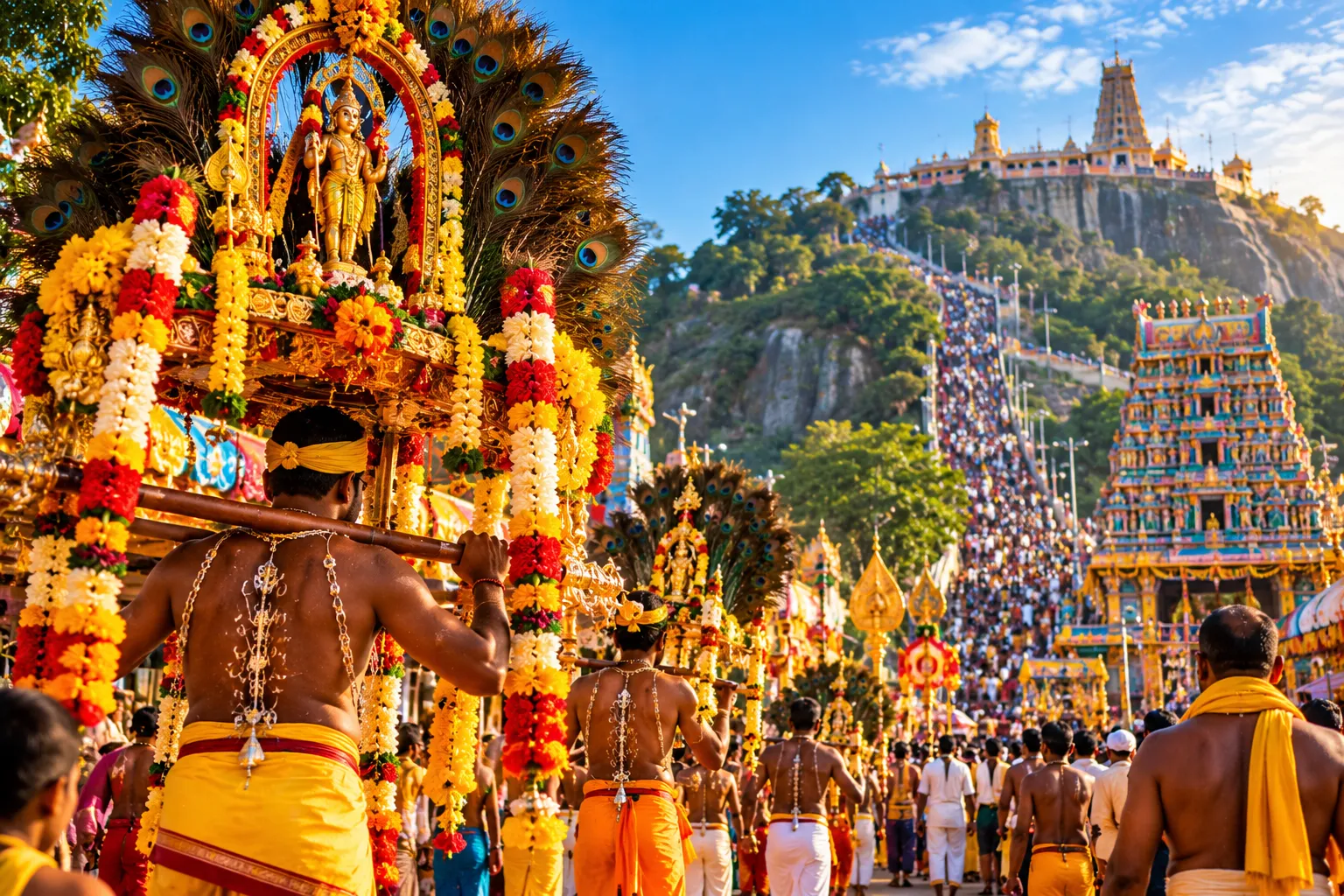
Thaipoosam, the main festival for Lord Murugan, falls on the day of the Poosam star in the month of Thai. The people of Chettinad are staunch devotees of Palani Andavar, and set out on foot with their kavadis on their shoulders a couple of weeks beforehand — from Devakottai, Karaikudi and the villages around — walking the whole way to the Dandayudhapani Swami temple atop Sivagiri, the Palani hill.

That is some 160 kilometres, on foot, in the middle of the working year. The Nagarathar kavadi is a distinct tradition of its own, and the walk is kept by people who have every means to travel otherwise and choose not to.

full story

Book Exhibition Illustration, generated

February · one week

Book Exhibition

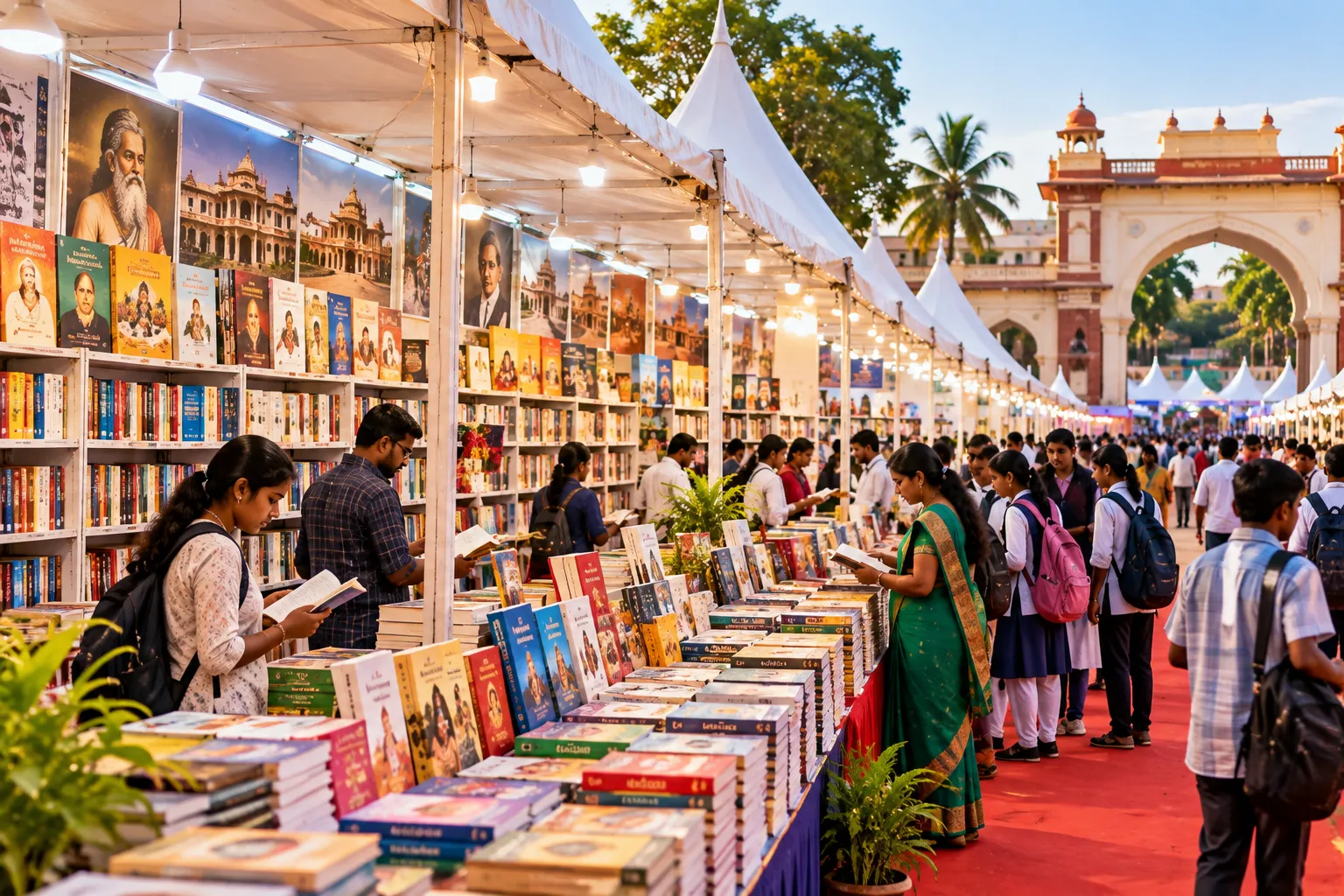
Karaikudi being an education capital, a week-long book exhibition — puthaga kankatchi — is held at the Kamban Manimandapam every February, with wide arrays of books on many subjects. Each evening students from one of the town's schools give a cultural performance. Booksellers and publishers hold further fairs through the year.

The town earned this one. Tamilvanan of Karaikudi founded the Manimekalai press; S.A.P. Annamalai founded and edited Kumudam; Vanathi Thirunavukkarasu Chettiar of Devakottai founded the Vanathi Pathippagam. A book fair here is an industry showing its wares at home.

language and letters

Masi Makam Illustration, generated

February – March · Masi, Makam star

Masi Makam

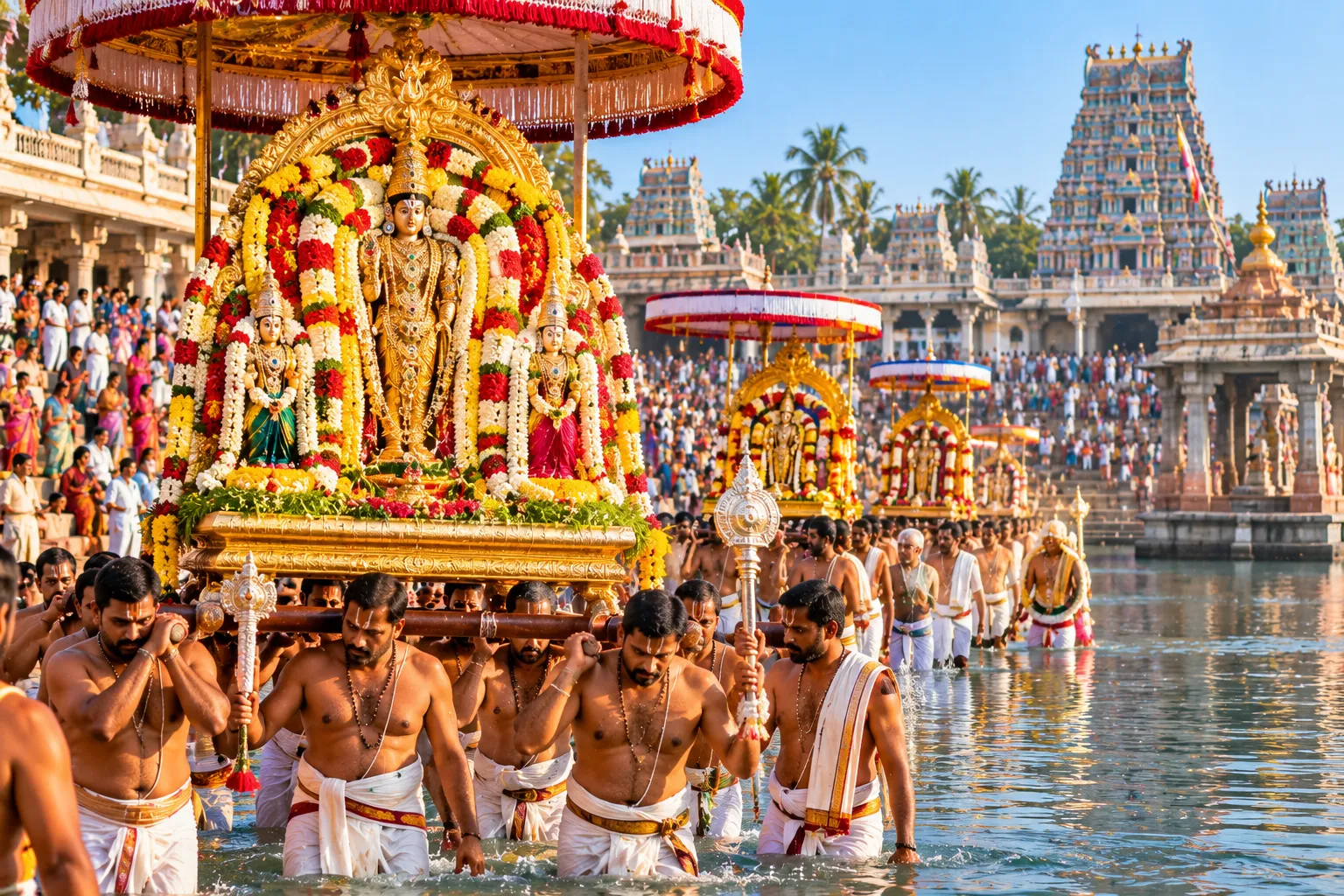
On the Makam star of the month of Masi, temple deities are carried down to water — the sea, a river or the temple tank — for the ritual bath of theerthavari. It is one of the older observances of the Tamil calendar and is kept most spectacularly at the Mahamaham tank in Kumbakonam, and on the seashore at Puducherry and Thiruchendur.

Inland it is a tank festival, which suits a district built around tanks. The same water systems that supply the town — described on the health page — are the ones the gods are brought down to.

Maha Sivarathiri Illustration, generated

February – March · Masi

Meenakshi Sundareswarar kovil Mahasivarathiri

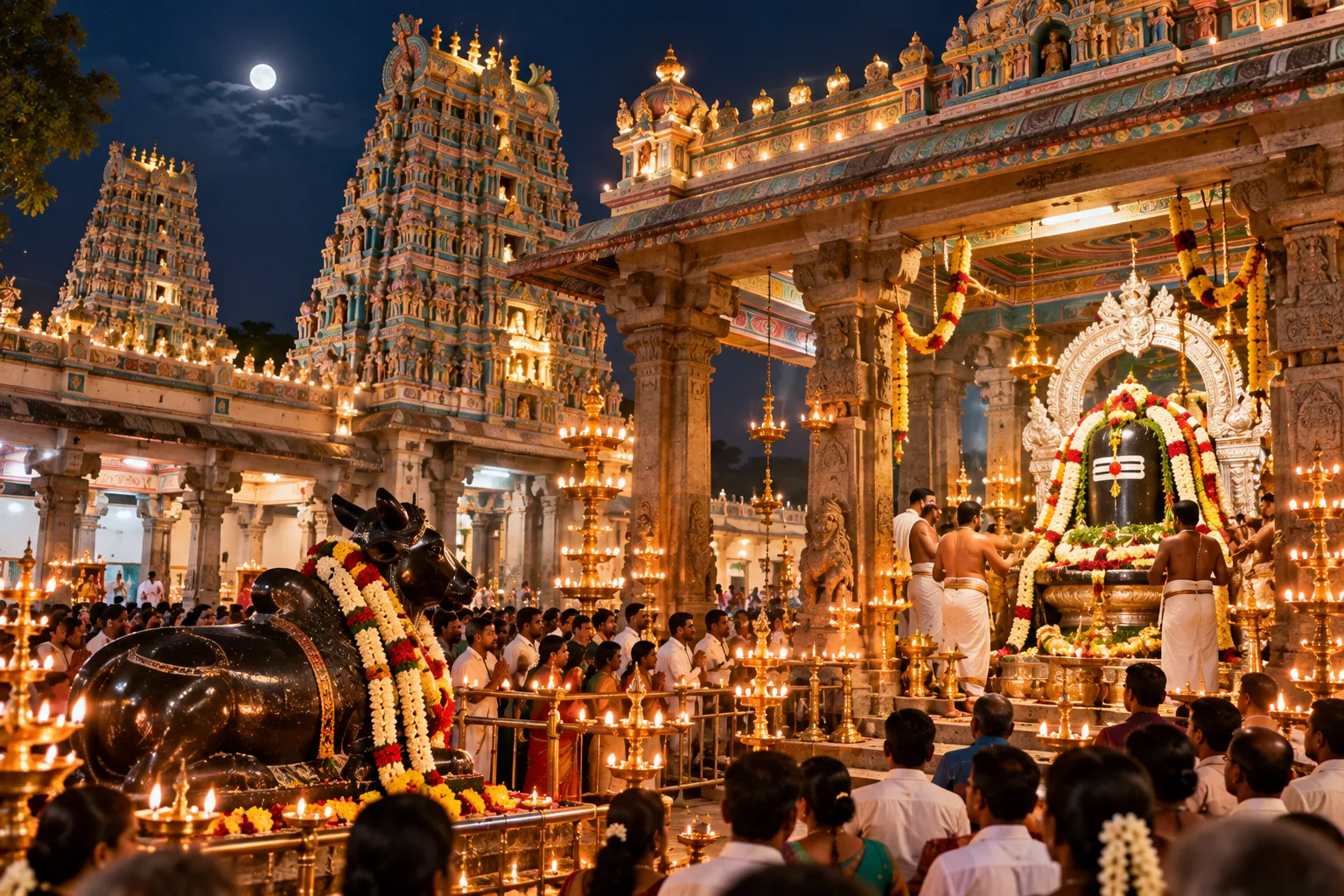
Sivarathiri is observed every month on the day before the moonless day; the one falling in the Tamil month of Masi is kept as Maha Sivarathiri, the grand night in honour of Lord Siva. People stay awake through the night praying, reading and singing his praise, and the fast breaks the next morning after ritual oblation.

It is celebrated in grandeur at the Sri Meenakshi Sundareswarar temple in the southwest of Karaikudi — built in 1872, known about the town as the Nagara Sivan Kovil, and possessed of a fine tank on its right side.

full story

Science and Technology Show Illustration, generated

28 February · National Science Day

Science and Technology Show

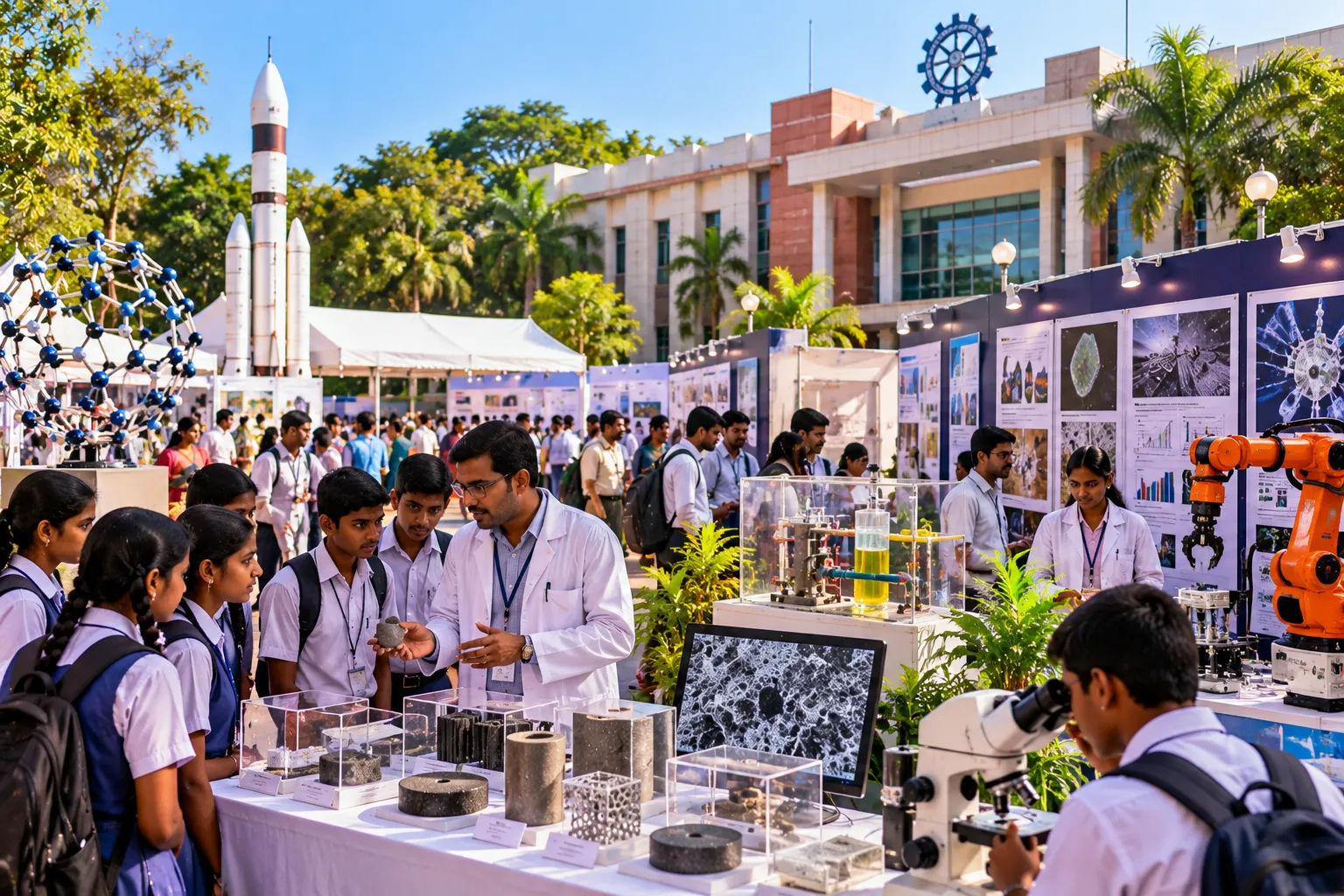
The Central Electro Chemical Research Institute observes National Science Day on 28 February as its Open Day. Visitors walk freely among stalls demonstrating the achievements, technology and future of science, alongside CSIR-CECRI's own contribution to it. On some occasions the open day is held in September instead.

Consider what this actually is: a national laboratory, in a town of a hundred thousand people, opening its gates once a year so local schoolchildren can walk through a working electrochemistry institute. It is here because one man gave three hundred acres and fifteen lakh rupees in 1948.

C.E.C.R.I. · how it came here

Sri Mariamman Illustration, generated

March · Masi–Panguni · ten days

Lalitha Muthumari Amman kovil Paalkudam

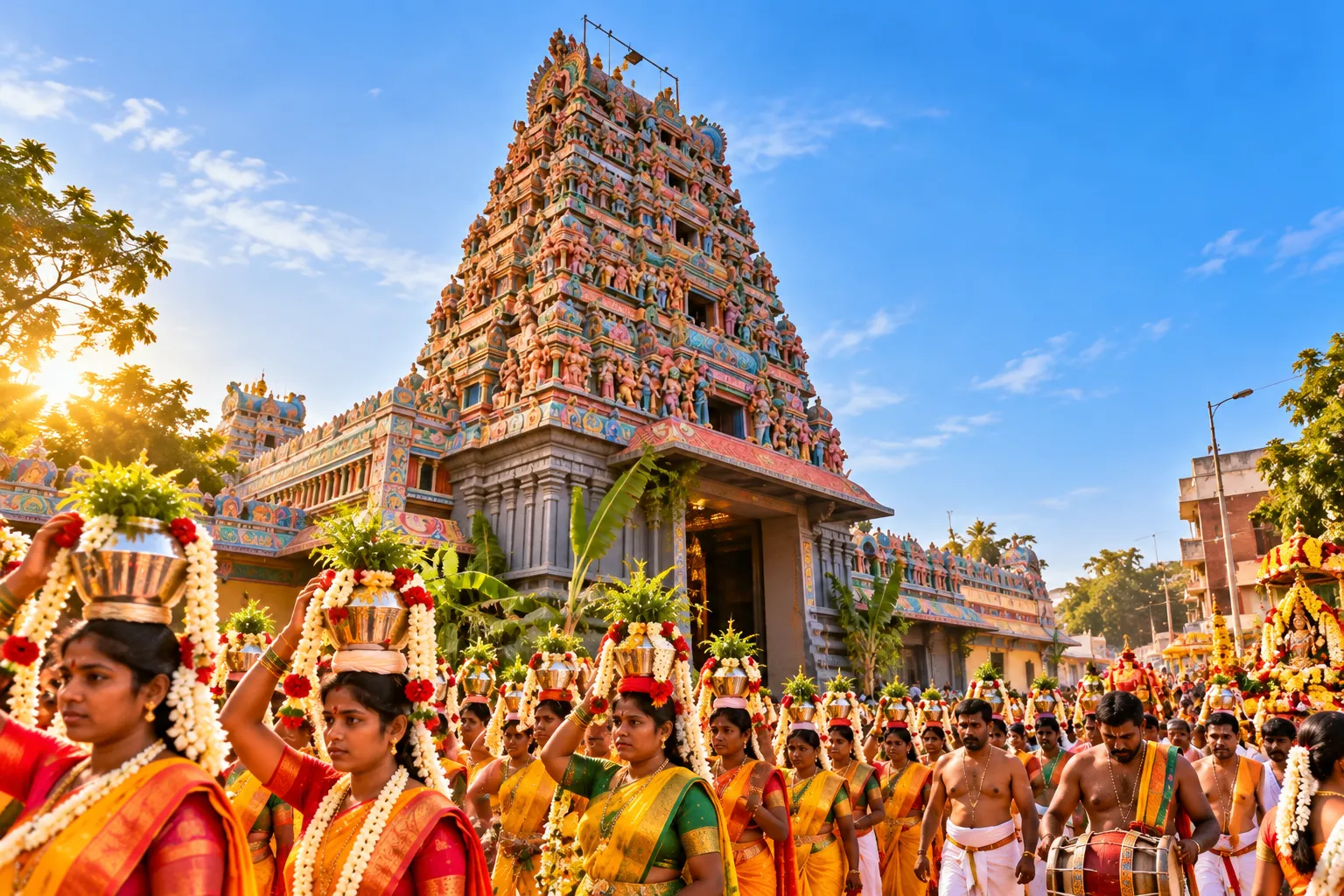
The festive season opens on the last Tuesday of Masi with Poochorithal, the floral festival, followed a week later by Sumangali Poojai, and closes with grandeur in the month of Panguni. From the first day people take processions from the Muthalamman temple — paalkudam, the pot of milk; theechatti, the fire pot; kavadi; alagu, the body piercing; pookuzhi, the walk across the bed of fire; and molaippari, the pots of tender grain shoots — performed as nerthi kadan, nandri kadan and venduthal: a vow fulfilled, a thanks given, a request made.

The temple is small and the story behind it is recent enough to be within living memory: a girl named Lalitha who came here from Samayapuram with smallpox in November 1956, and began to foretell. In recent years the festival has grown to very large proportions indeed.

full story

Kamban Thirunal Illustration, generated

March – April · Panguni

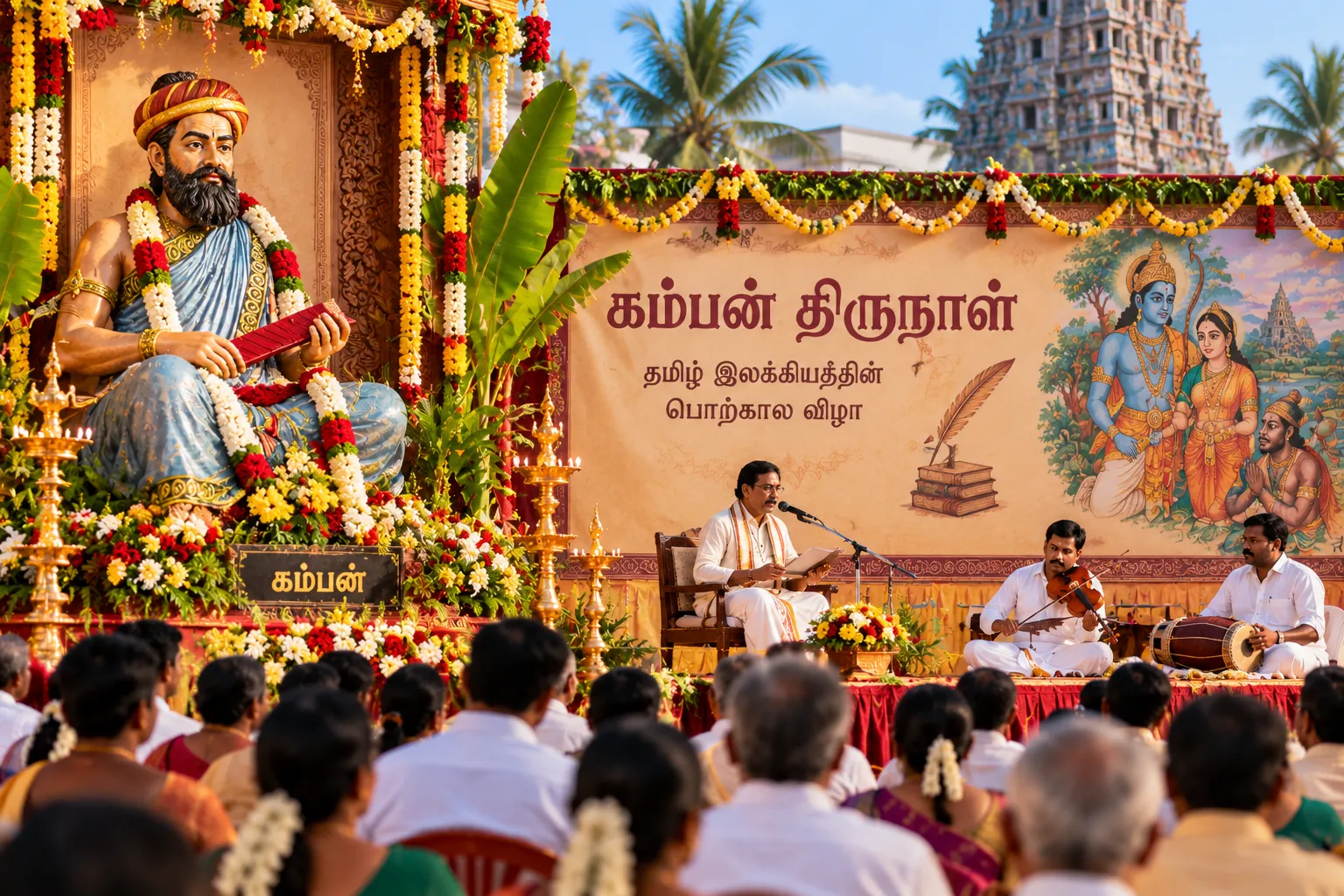
Kamban Thirunal

A festival of the classical Tamil language, held each year since 1939 around the star of Hastham in Panguni, now at the Kamban Manimandapam, in honour of the emperor among poets, Kavichakravarthy Kamban. Scholars and admirers of Tamil exchange views, and the works of Kamban and other great poets are taken up for debate.

It exists because of Saw. Ganesan, known as Kamban Adippodi, the dust at Kamban's feet. He founded the Kamban Kazhagam, was central to building the Manimandapam, organised the first Kamban Thirunal, and conceived the temple to the goddess of the Tamil language, widely described as the only one in the world, which opened in 1993. Kamban's own mausoleum is nearby at Nattarasankottai.

full story

Panguni Uthiram Illustration, generated

March – April · Panguni, Uthiram star

Panguni Uthiram

The full moon of Panguni, falling on the Uthiram star, is the day of the divine marriages — Murugan and Deivanai, Siva and Parvati, Rama and Sita — and so the most auspicious day in the calendar for a human wedding. Temples across the district hold their thirukalyanam, and kavadi processions are taken at the Murugan shrines.

It closes the Tamil year. A fortnight later Chithirai opens and the whole round begins again with the new year, which is where this page started.

Twenty-one gatherings, twelve months, and one town that empties its offices for at least four of them.

The Karaikudi year
Read on The festivals, in full The heritage page gives the long accounts — the legend behind the Paalkudam, why the Koppudai Nayaki moolavar leaves its sanctum, and the temples these festivals belong to. The heritage page

Dates on this page are given by Tamil month and star, because that is how they are fixed; the Gregorian dates shift each year. Before travelling for any of them, confirm the date with the temple or with someone in the town — and if a festival kept here is missing from this list, tell us and it will be added.