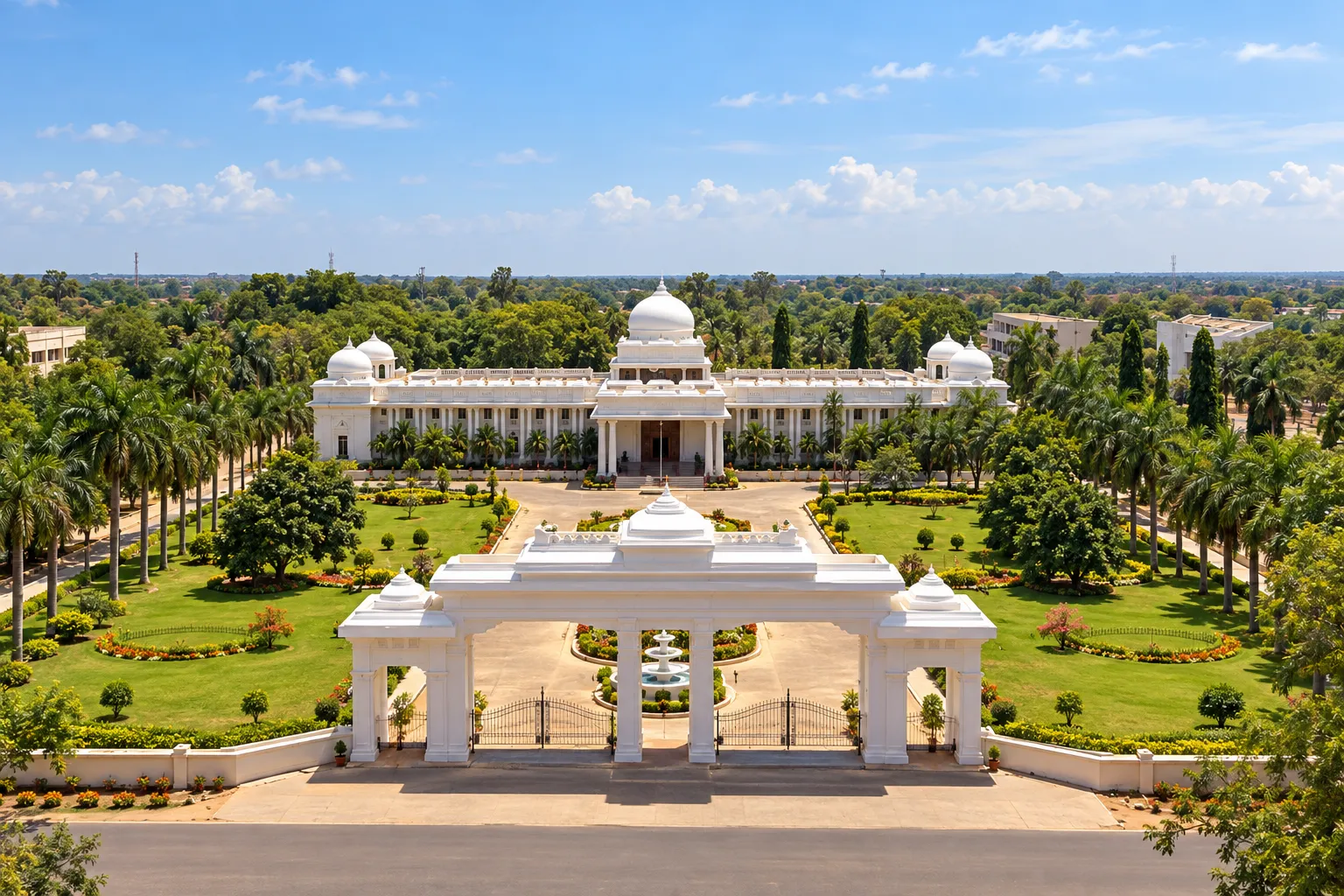
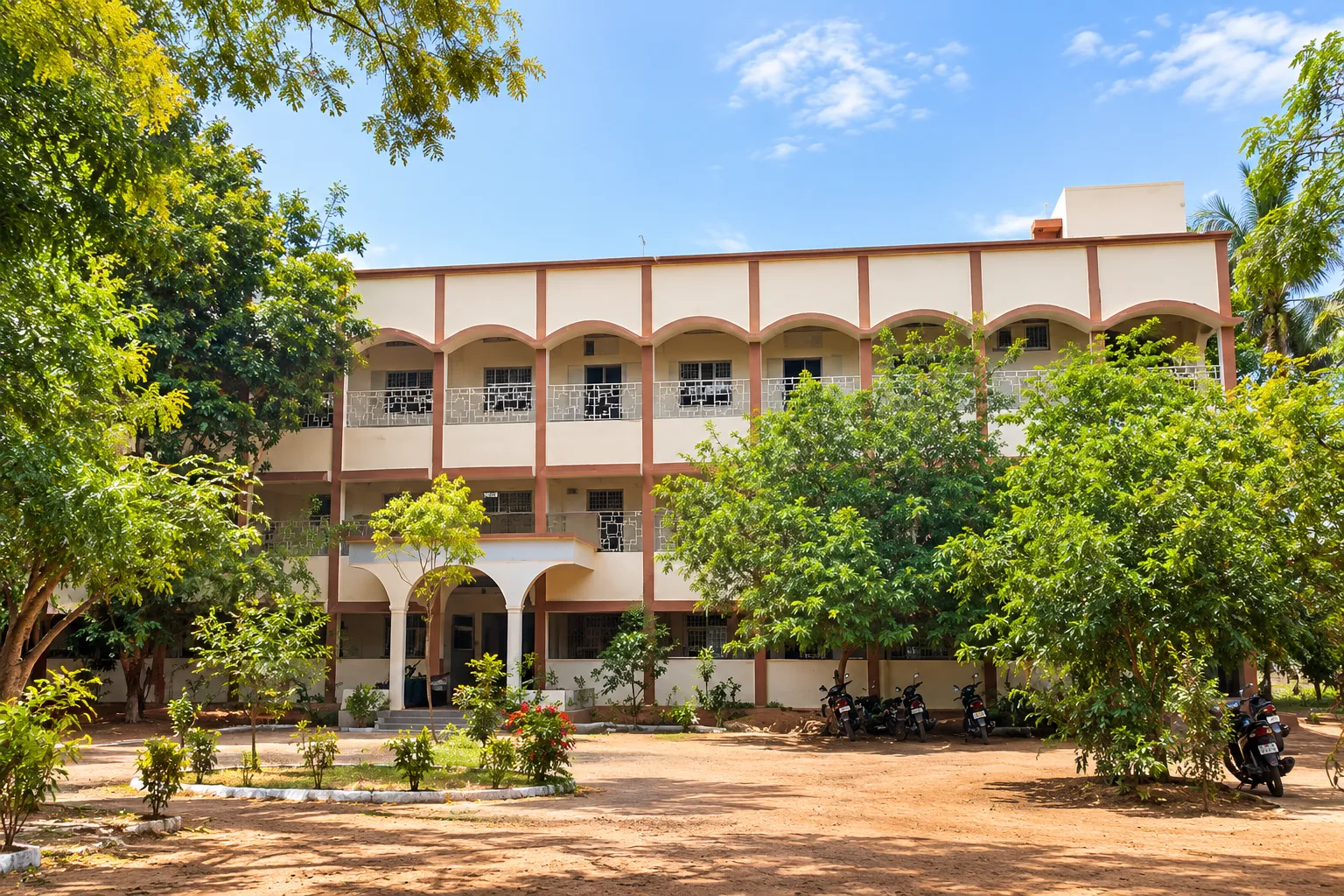
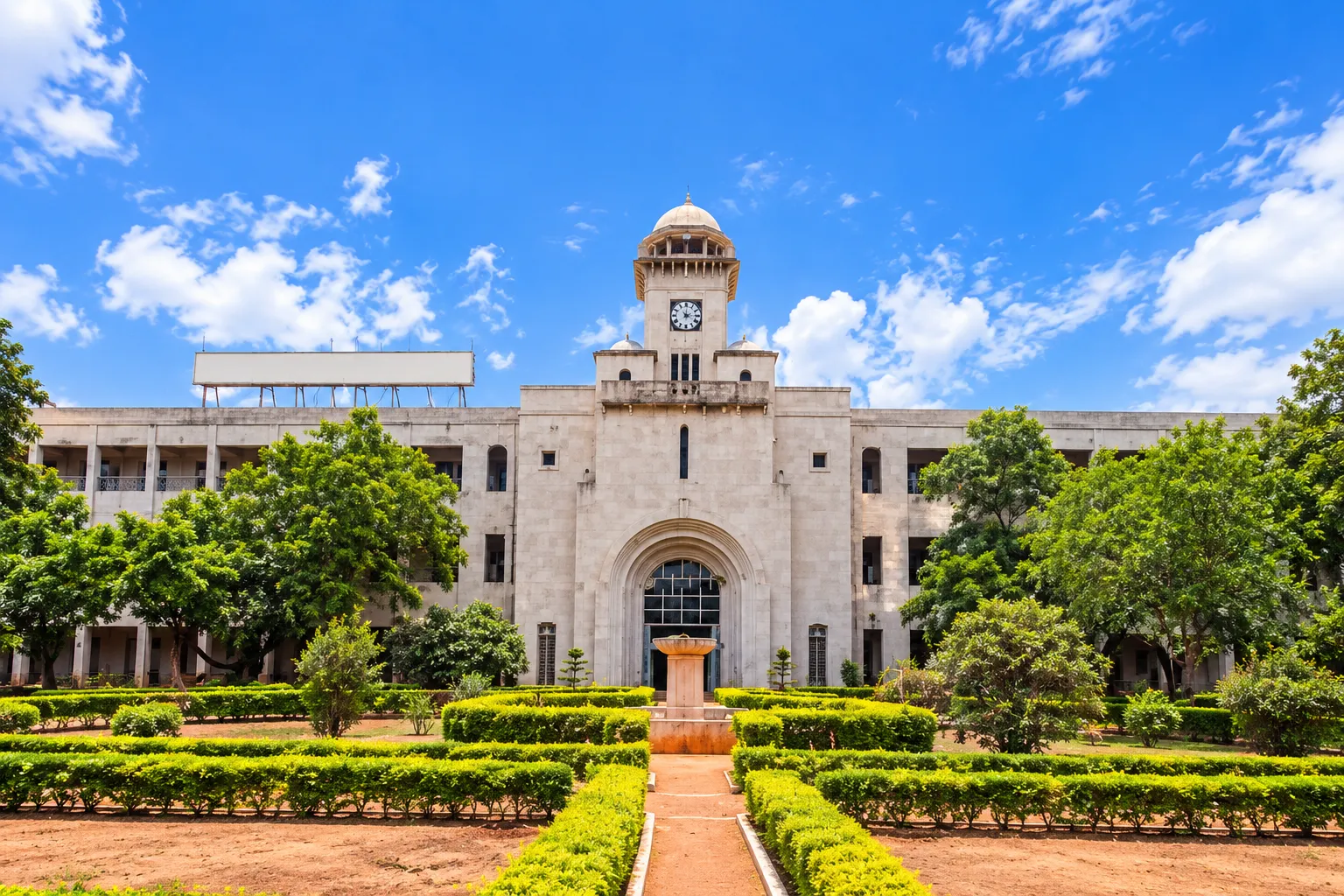
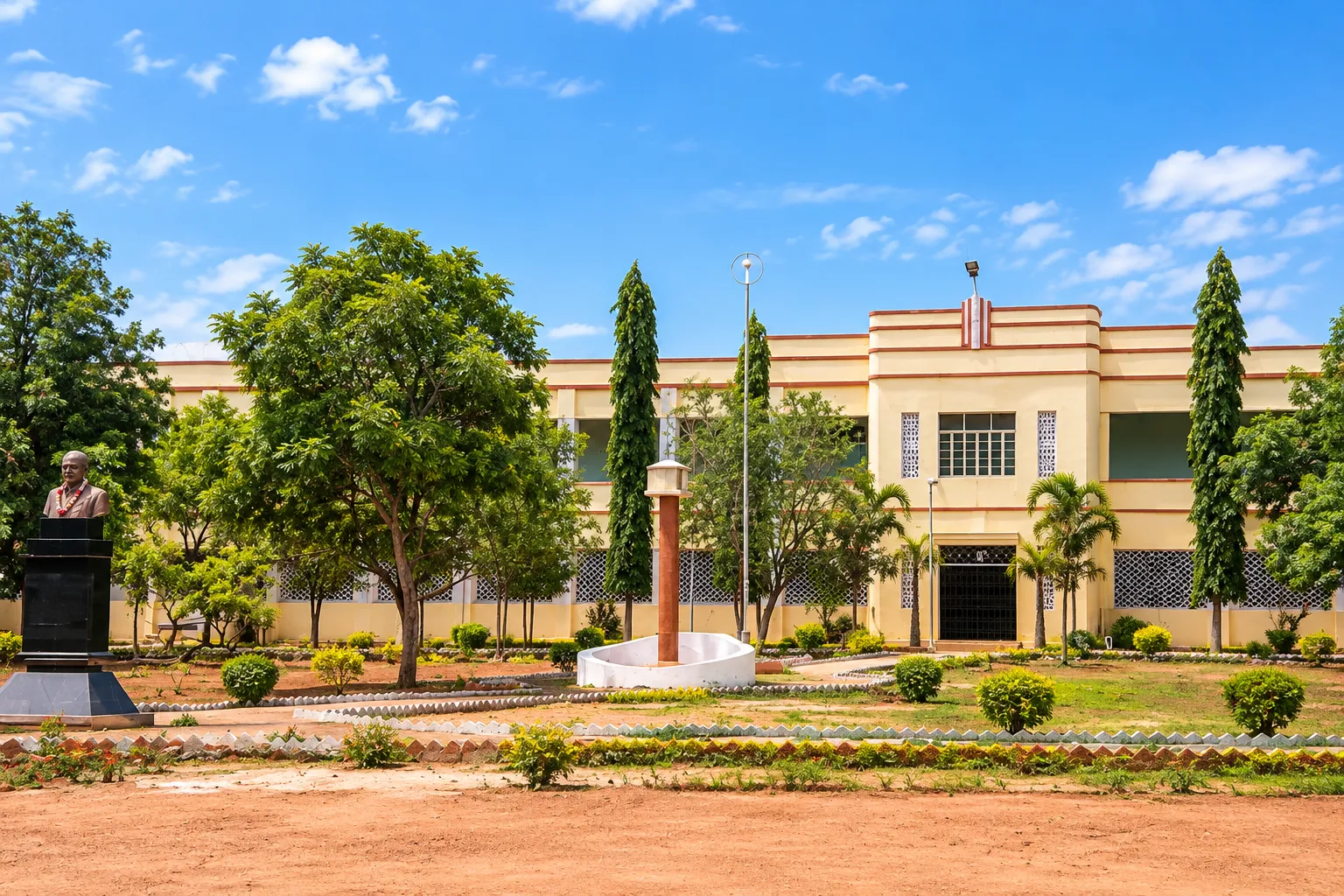
In 1948 the Government of India was deciding where to put a national
electrochemical laboratory. A businessman from Kottaiyur offered three hundred acres and fifteen lakh rupees,
and it came here. Almost everything on this page happened that way.
Three parts · twelve institutions · about twelve
minutes
There is no geographical reason for Karaikudi to be an education town. It has no great river, no
port, no mineral wealth and no great industry. What it had was a community that made money abroad and a
conviction, close to an article of faith, that the right thing to do with it was to endow a college and put
someone else's name over the gate.
Part OneThe man who paid for itTextiles, rubber, tin, insurance, hotels, a stock exchange seat and briefly an
airline — converted, inside ten years, into an arts college, an engineering college and a national
laboratory.
Vallal Alagappa Chettiar
Education is the manifestation of the perfection already in man.
Swami Vivekananda
Karaikudi is eternally indebted to one man. Padma Bhushan Dr. RM. Alagappa Chettiar is called
Vallal — the philanthropist — and without him Karaikudi would have been a far smaller place.
He was born at Kottaiyur on 6 April 1909 and died in Madras on 5 April 1957, one day
short of forty-eight. The fortune began with a family banking firm whose interests lay chiefly in Malaya and also in Burma,
and then came from a spread of businesses that is
startling to read in one line: textiles — he founded Cochin Textiles in 1937, later renamed Alagappa Textiles —
rubber plantations, tin mining, insurance companies, hotels and theatres, stock exchange interests, and for
a period a private airline. He was knighted in the 1946 New Year Honours at the age of thirty-six,
and renounced the title after Independence. He was awarded the Padma Bhushan on 26 January 1956.
He founded the Alagappa Chettiar Educational Trust with the stated aim of developing what was then a
backward area into a centre for higher education, and provided the funds for the institutions to exist. He
gave to others' causes too — a lakh of rupees to the Tamil department of Travancore University as early
as 1943 — but the concentration of it went into a few square kilometres of Sivagangai district.
1909–57born at Kottaiyur, dead at forty-seven; the whole endowment made inside a single decade of it
11 Aug 1947Alagappa Arts College opens — four days before Independence
300 acresand ₹15 lakh given to bring C.E.C.R.I. to Karaikudi
The educational estate raised by Vallal Alagappa Chettiar to bring affordable, quality education to a
rural population. It began with the Alagappa Arts College, opened on 11 August 1947, and grew to
take in the engineering college, a polytechnic, a technical institution and schools — and, in
time, a university.
He founded institutions outside the district as well, among them the A.C. College of Technology at
Guindy, now part of Anna University, and schools in Chennai.
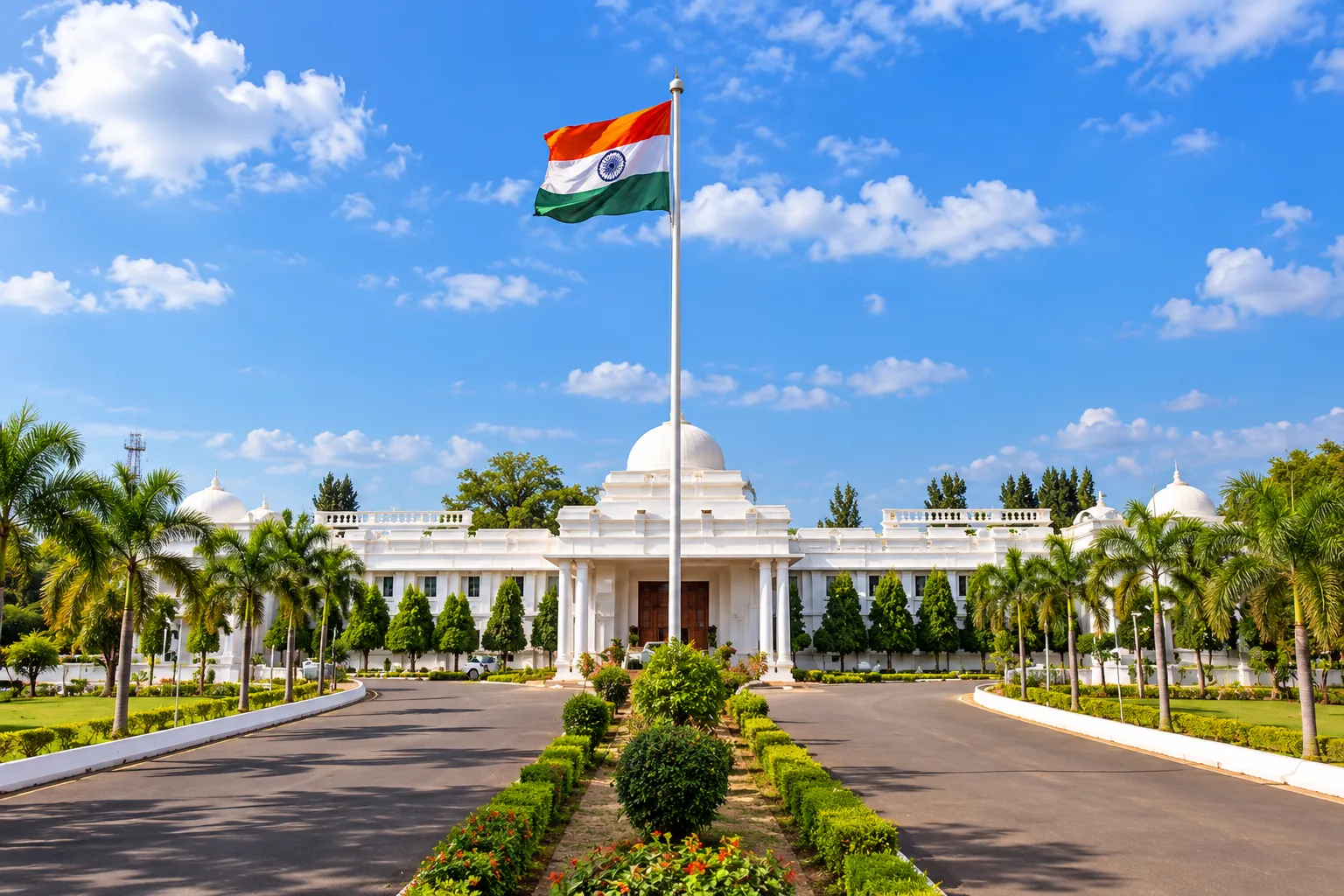
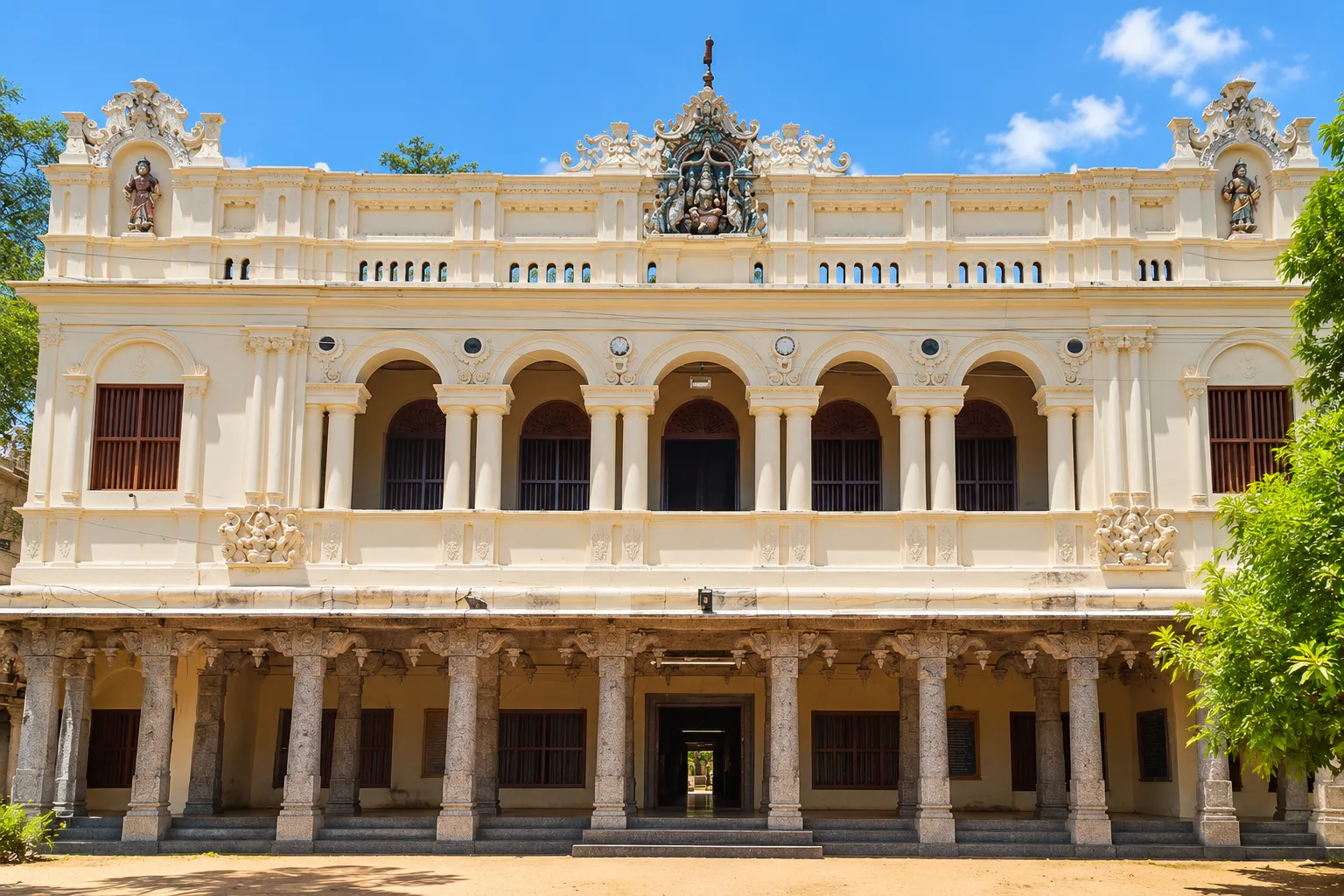
The first of them, and the seed of everything else. It opened on 11 August 1947 — four days
before Independence — started by Dr. Alagappa Chettiar to put a degree within reach of a rural
population that had none. It is today a co-educational government arts and science college.
In 1985 its management passed to the Government of Tamil Nadu. That is the part worth noticing: the buildings and the endowment passed to
the state rather than staying in the family, which is why the institution is still running nearly eighty
years later and is not anyone's property.
Alagappa Chettiar Government College of Engineering and Technology
Long known as A.C.C.E.T. and now formally A.C.G.C.E.T., it began on 21 July 1952
with three faculties — civil, mechanical, and electrical and electronics. Dr. Rajendra
Prasad, President of India, laid the foundation stone of its main building on 19 February 1953. It
is today an autonomous government engineering college.
Placing an engineering college next door to a national electrochemical laboratory, in a town of this
size, was a deliberate act of planning rather than a coincidence of endowments.
A major government polytechnic, established in 1955, teaching diploma-level engineering. It is
the least glamorous institution on this page and arguably the most useful one: a polytechnic is what
turns a district's school leavers into people who can be employed by its workshops, its construction
firms and its electrical trades without leaving home first.
In 1985 the colleges he had founded gave rise to a university in its own right, constituted by an Act of
the Tamil Nadu State Legislature, with his Colleges of Education (1950) and Physical Education (1956) as
its first constituent colleges. It is a state university with a wide affiliated network across
Sivagangai and the districts around it, teaching across the sciences, humanities, management, education
and law.
It has done well by the ordinary external measures. It is accredited A++ by NAAC with a CGPA of
3.59 under dual mode in its fourth cycle, and is graded a Category I university by the
UGC — the tier that carries the widest academic autonomy.
The larger story, though, is the Directorate of Distance Education, set up in 1992.
Through all its modes together the university serves a student community of the order of a hundred
thousand. That is the founder's original proposition — affordable education for people who
cannot easily come to it — running at a scale he could not have imagined, from the same town.
Thirty-eight years separate the college from the university, and the founder saw only ten of them. That
is the ordinary arithmetic of endowment: the person who pays almost never sees what it becomes.
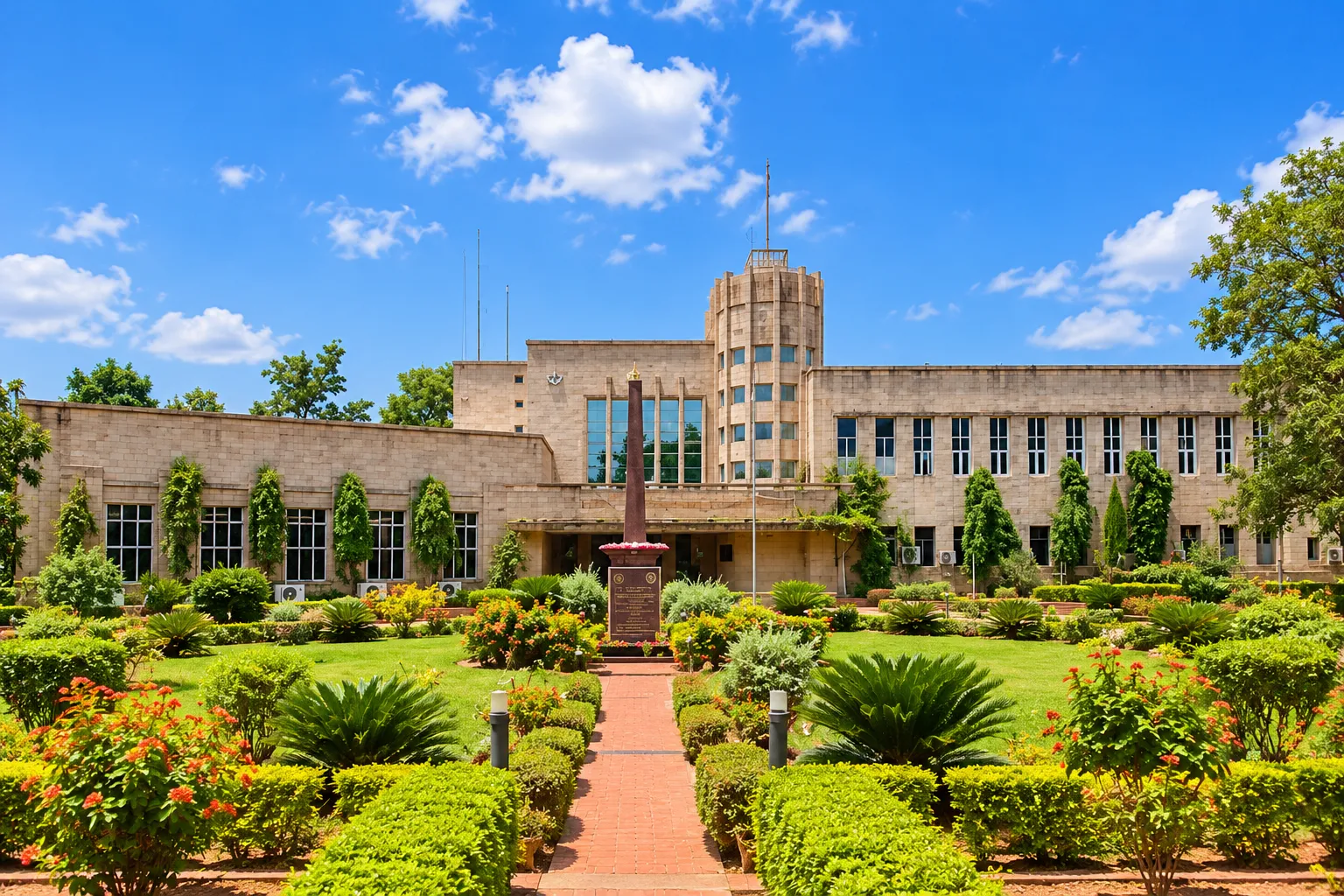
CSIR-CECRI, the twelfth of CSIR's national laboratories, describes itself as the largest research
establishment for electrochemistry in South Asia — batteries and energy
storage, corrosion science, electroplating and industrial electrochemicals — and it is in Karaikudi
because of a private gift. Vallal Alagappa Chettiar provided 300 acres and fifteen lakh
rupees; Pandit Jawaharlal Nehru laid the foundation stone on 25 July 1948; Dr.
Sarvepalli Radhakrishnan, then Vice-President of India, dedicated it to the nation on
14 January 1953.
Its Open Day each 28 February, for National Science Day, is one of the fixtures of the town's
year.
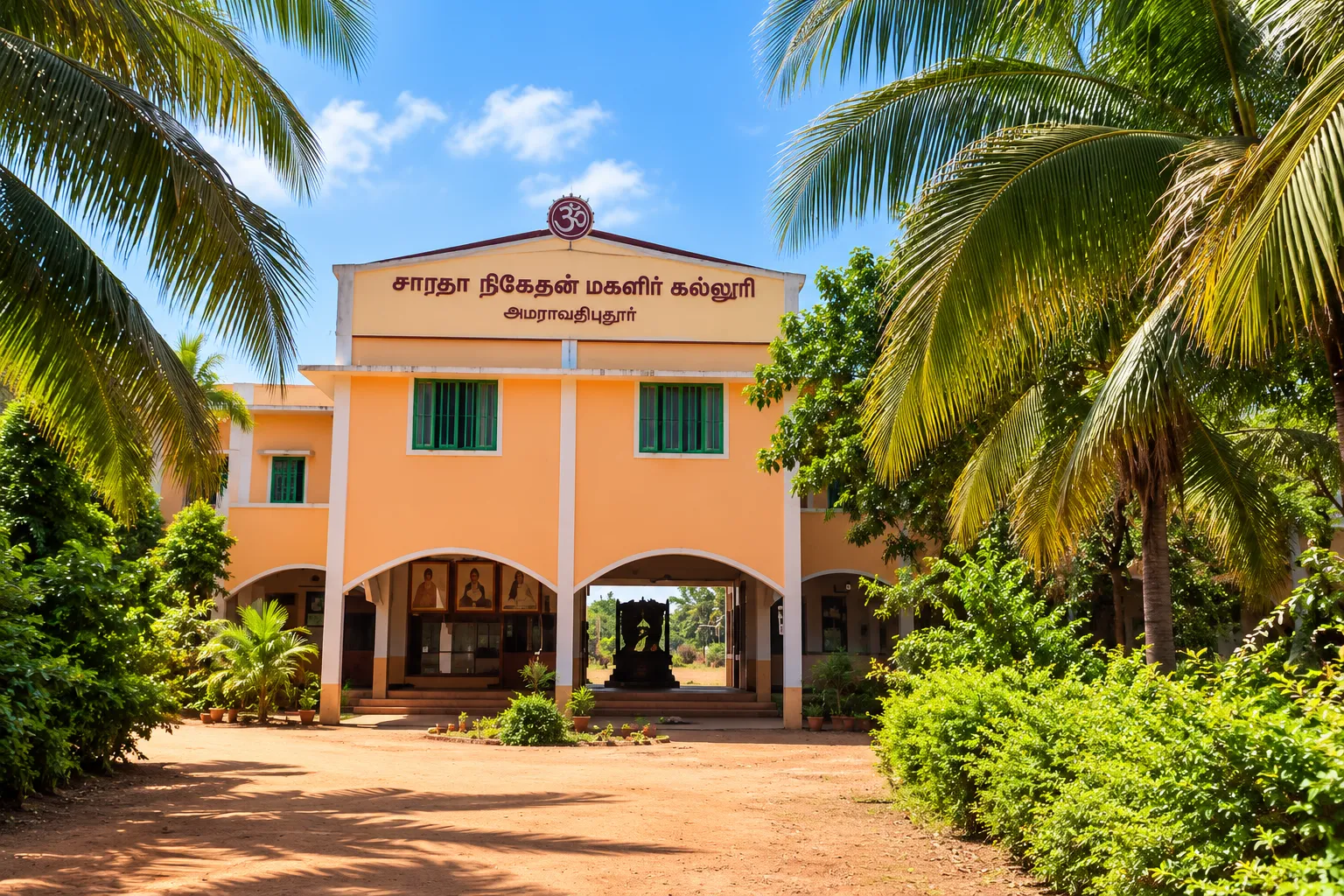
A women's degree college at Amaravathipudur, on the edge of Karaikudi, established in 1997. It
belongs to a later chapter of the same tradition — the endowments of the 1940s put a college
within reach of the district's sons; this one, half a century on, did the same for its daughters closer
to home, which for a rural family is often the deciding factor in whether a girl continues past
school.
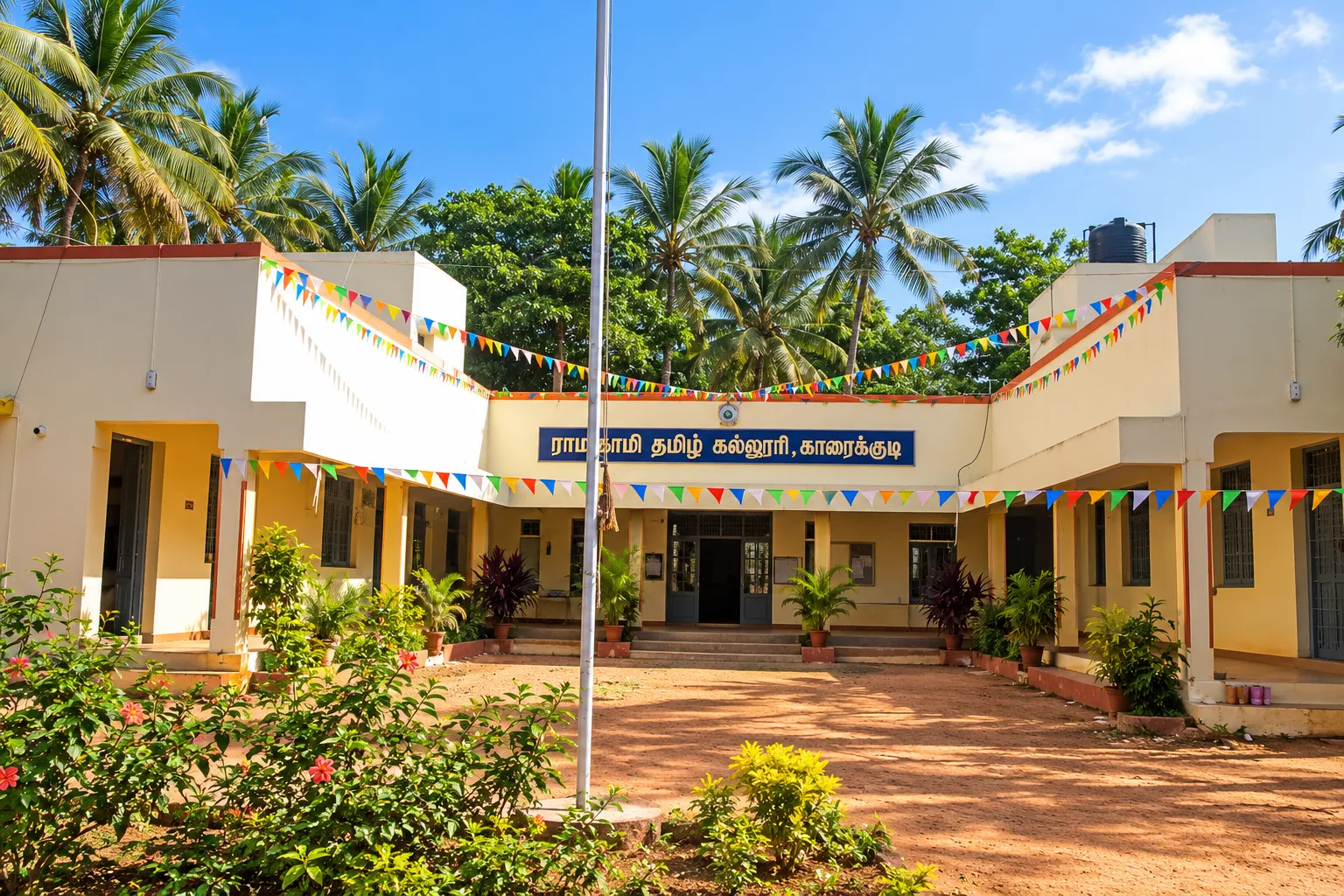
Founded by Periyakaruppan Chettiar for the study of Tamil language and literature. A town that
holds what is widely described as the only temple in the world to the goddess of Tamil, the Kamban Kazhagam, the Kamban Manimandapam
and Kamban's mausoleum at Nattarasankottai, near Sivaganga, was always going to have a Tamil college as well.
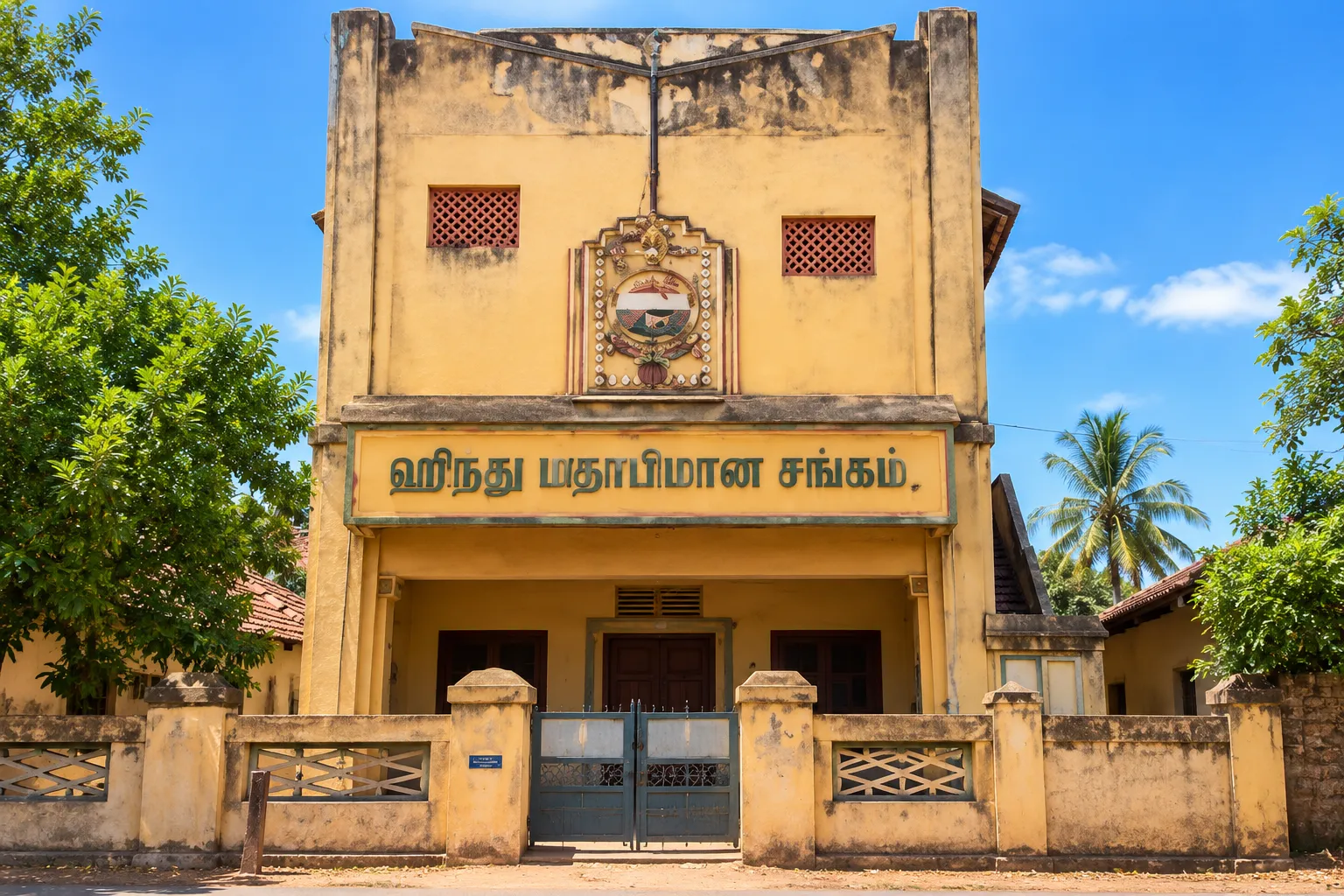
A society of long standing in the town, and the site of one of Karaikudi's better documented visits.
Founded by Chettiar youths of Karaikudi on 10 September 1917, it was visited by Mahakavi
Subramaniya Bharathiyar on 9 November 1919; he wrote seven songs praising its work, and
the photograph of him seated with its members, taken on that visit, survives and is an invaluable
reminder of it.
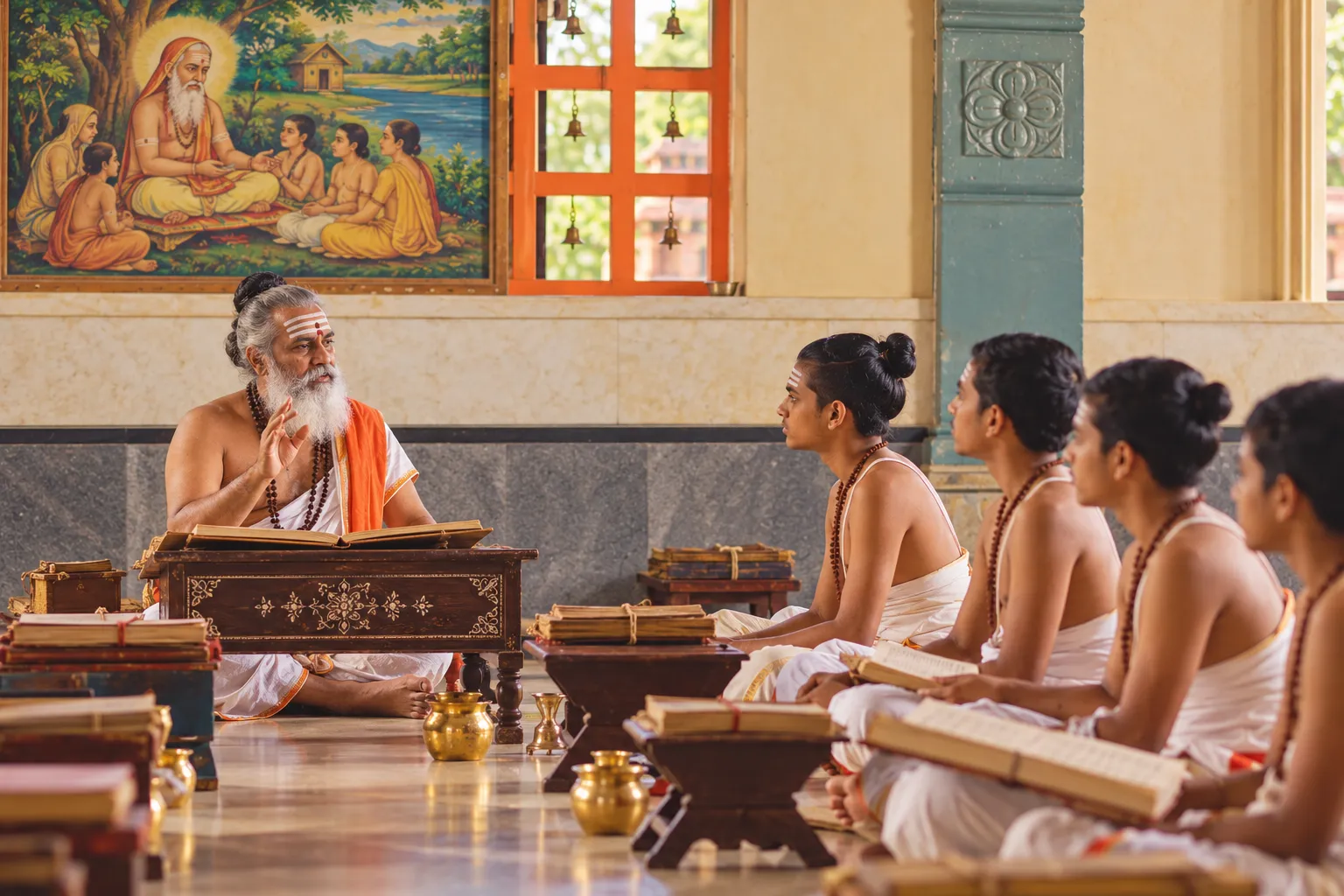
A Saiva monastic seat at Koviloor, long a keeper of Tamil scholarship and Saiva Siddhanta teaching for
the Chettinad region, attached to the Kotravaleeswarar temple there. An aadheenam is an
institution of a kind the modern university does not replace: it holds a library, a lineage of teachers,
a publishing tradition and a set of obligations that run for centuries rather than terms.
A math at Kalaiyarkovil, the town of the great Kalaiyarkovil temple, holding to the study and teaching
of Vedanta in the district. Kalaiyarkovil carries its own place in the region's history as a stronghold
of the Maruthu brothers in the late eighteenth century.
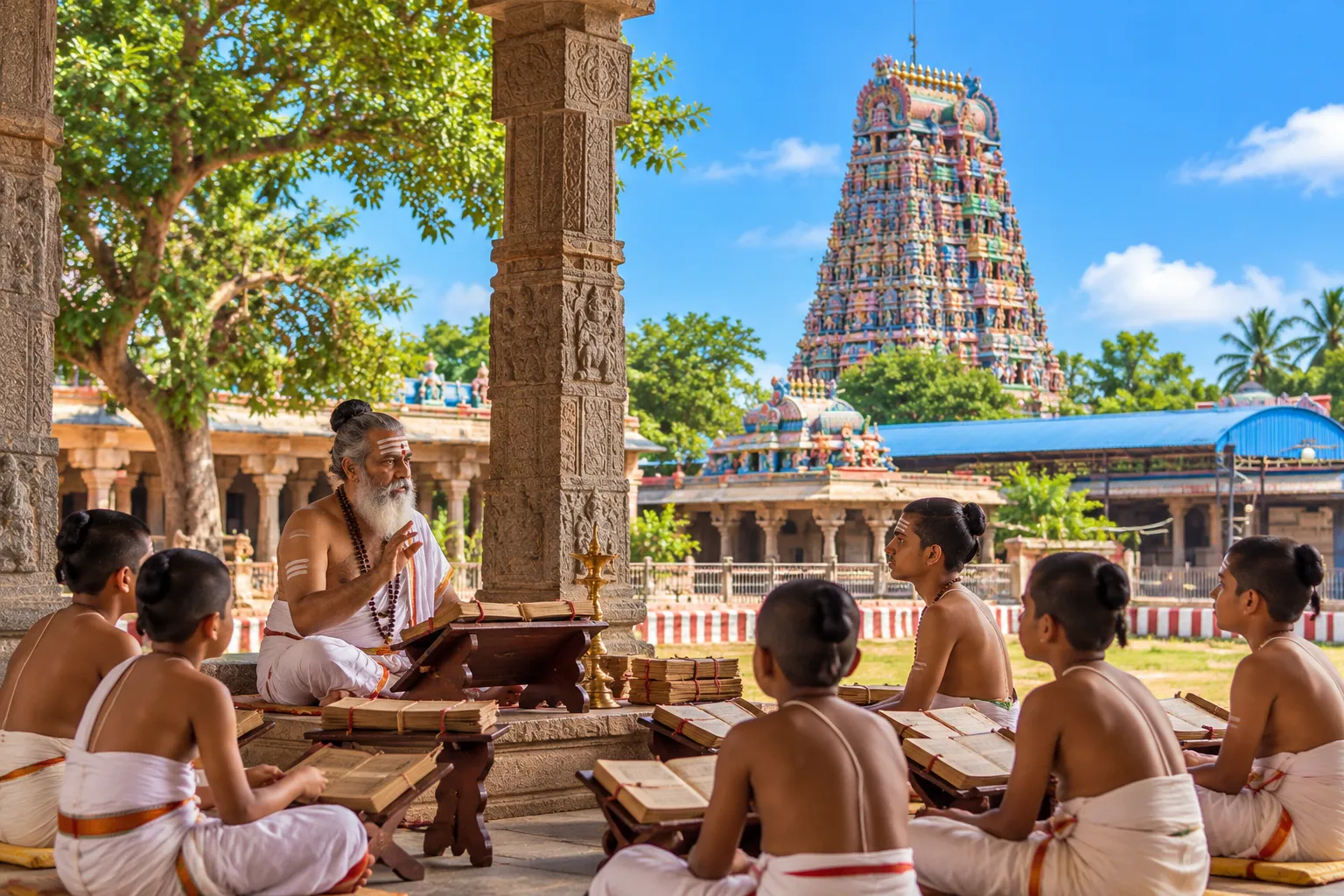
The vedagama padasalai at Pillaiyarpatti, beside the rock-cut Karpaka Vinayakar temple, where the
vedas and agamas are taught in the traditional way — by recitation, to a fixed metre, from a
teacher rather than a text. It sits about twelve kilometres from an institute doing lithium battery
research, which is a fair summary of the range of things this district teaches.
Part ThreeThe pattern, and the presentAlagappa was not an exception. He was the local instance of something the whole
community did.
The wider pattern
Read the founders of the colleges of southern Tamil Nadu and the same district keeps appearing.
Raja Sir S. Rm. M. Annamalai Chettiar of Kanadukathan founded Annamalai University at
Chidambaram — his Meenakshi and Tamil colleges were combined into it on 1 January 1929, and it was
among the earliest residential universities in India. Karumuttu Thiagarajan Chettiar of A. Thekkur,
who also founded Bank of Madura and Meenakshi Mills, founded Thiagarajar College of Engineering at
Madurai. O.RM.M.SP.SV. Sevugan Annamalai Chettiar founded Sree Sevugan Annamalai College at
Devakottai. Periyakaruppan Chettiar founded the Tamil college here.
Four men, four towns, one district, and in every case the same sequence: a fortune made in finance or trade
abroad, brought home, and converted into a permanent institution. It is consistent enough to be a cultural
fact rather than a run of coincidences — and it is the reason a semi-arid taluk with no great industry has
more higher education than places many times its size.
The money came from Rangoon. The buildings stayed in Sivagangai.
One number on the census return is worth pausing over. At 2011 Karaikudi returned female literacy of
86.29 per cent against male literacy of 94.71 — a gap of eight and a half points, which is
real, but a female figure well above the national average of the time and above most comparable rural
taluks.
Some of that is the ordinary effect of having colleges nearby. Some of it is particular to this community.
A Nagarathar household ran on a division of labour in which the men were overseas on three-year postings and
the ஆச்சிAachi held the house, the property and
much of the domestic treasury for years at a stretch. A woman who has to run a firm's home end of the
business through a correspondence conducted by ship is a woman whose literacy is not optional.
The institutional side followed later than it should have — Sri Sarada Niketan opened in 1997, half a
century after the men's colleges — and the Government Arts College for Women at Sivaganga serves the
district alongside it. But the disposition was there long before the buildings were.
Research, and staying on
Karaikudi is unusual among district towns in having somewhere to go after the degree. CSIR-CECRI is
a working national laboratory: it takes doctoral students through the Academy of Scientific and Innovative
Research, runs sponsored and industrial projects, and employs scientists and technical staff who live in the
town. An engineering college, a polytechnic and a state university sit within a few kilometres of it.
What the district has historically lacked is the next step — graduate employment that is neither
government service nor migration to Chennai. That is precisely what the TIDEL Neo mini IT park at
Kalanivasal, opened on 31 January 2026, is aimed at: five acres, fifty thousand square feet, and room
for around six hundred IT professionals in a town that has been exporting its graduates for
generations.
The long-standing problem
Chettinad has been educating people and then watching them leave since the nineteenth century —
first to Rangoon and Colombo, later to Madras, Singapore and beyond. The colleges were built by men who
had themselves made their money abroad. Whether a small IT park changes that arithmetic is an open
question; it is at least the first serious attempt in a long time.
Schooling today
Below the colleges sits an ordinary and rather dense school system. At the time of the 2011 Census the
municipality counted roughly six government schools, six government-aided schools and nine private
schools — a mix that matters, because the aided school is the characteristic Tamil Nadu
institution: privately founded, often by exactly the kind of endowment this page describes, and then run
with public salaries. Matriculation and state board sit side by side, and around them is the coaching
ecosystem that grows wherever families take examinations seriously.
At the 2011 Census the municipality returned a literacy rate of 90.49 per cent — 94.71 for
men, 86.29 for women — well above the national average.
Karaikudi and its adjoining places now offer education from pre-KG to doctorate without leaving the taluk:
schools, arts and science colleges, engineering and polytechnic institutions, a Tamil college, a school of
Vedas, the maths at Koviloor and Kalaiyarkovil, a state university and a national research institute. For a
town of a hundred thousand people that is a remarkable inventory, and none of it was inevitable.
90.49%literacy at the 2011 Census, against a national average well below it
1947the first college, opened four days before Independence
pre-KG to PhDavailable without leaving the taluk
2026TIDEL Neo opens at Kalanivasal, aimed at keeping graduates in the district
This page lists institutions of long standing rather than
every school and college in the taluk, and it is not a directory of admissions. For current courses, fees or
intake, contact the institution directly. Corrections and additions are welcome by
email.